
From monthly Korean grocery deliveries to KPop Demon Hunters, a Korean mum reflects on how much has changed in Britain.
When Korean Food Was Hard to Find
When I first moved to the UK in 2013, it was quite unusual to meet someone who knew much about South Korea.
I was living in Exeter, where Korean groceries were difficult to find. I remember a Korean supermarket owner in Bournemouth who would take orders in advance and drive to Exeter once a month to deliver them. That’s how I got hold of my Korean food!
Even in London, the Korean food scene was very different. Apart from a handful of restaurants, most seemed to cater primarily to the Korean community. Many were rather old-fashioned places run by long-established Korean residents, serving familiar food from home.
Korean cuisine certainly wasn’t the trendy dining experience it has since become.
Of course, the pace of change hasn’t necessarily been the same everywhere. Exeter and London are very different places, and much of what I’ve witnessed has been in London, where international trends tend to take hold more quickly.
…to the Korean Wave Going Mainstream
Over the years, I watched Korean culture become increasingly visible in everyday life.
K-pop and Korean dramas became increasingly popular. Korean beauty products started appearing in mainstream shops, and modern, trendy Korean restaurants began popping up across London. K-pop concerts became regular events, attracting huge audiences.
Korean fried chicken became so popular that ‘Korean chicken’ started to feel like a familiar food category in its own right. Even high-street chains such as LEON and Gail’s began incorporating Korean flavours, including Korean-style chicken and kimchi, into their menus.
Mainstream supermarkets such as M&S also started selling ‘Korean-inspired’ products. I even spotted tteokbokki, the spicy rice cakes that were once difficult to find outside Korean shops.
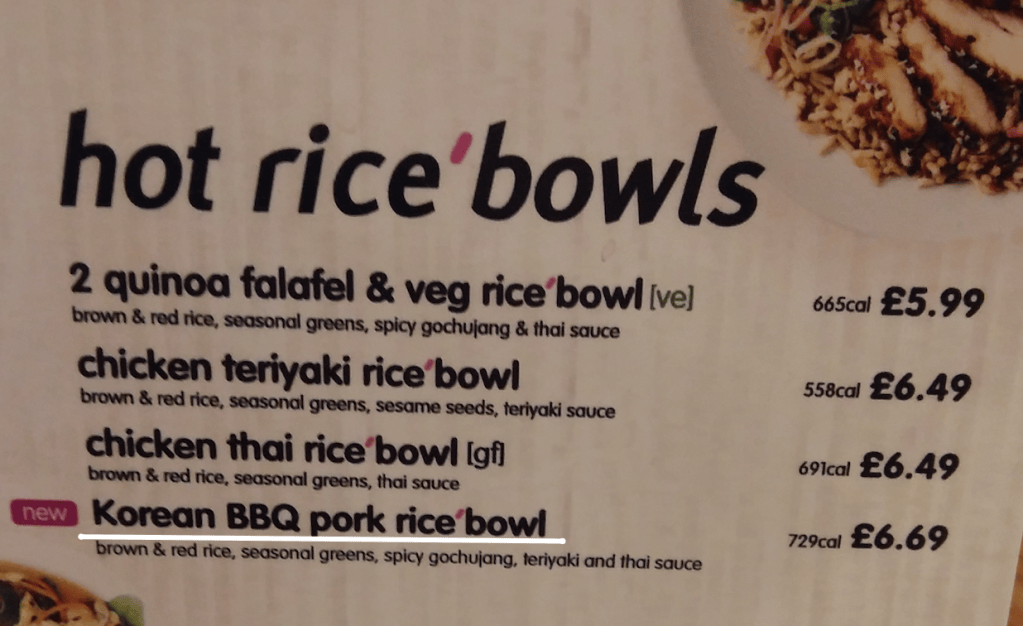
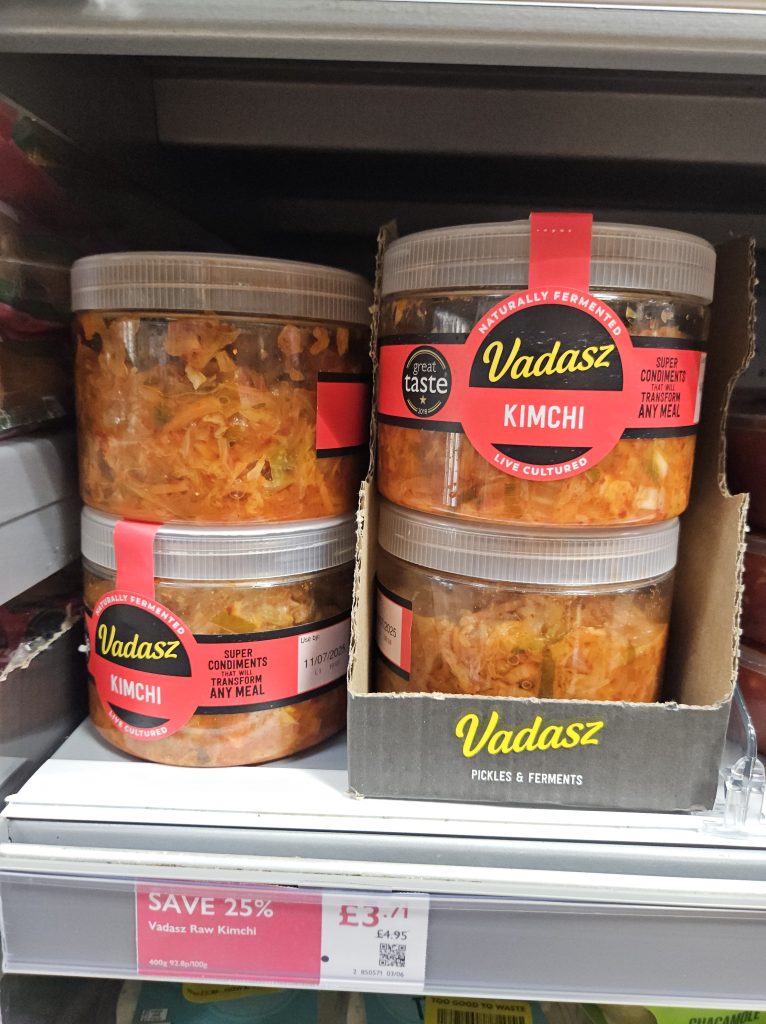
Perhaps one of the most striking examples was the JUNG Korean Food Festival, held at King’s Cross in May 2026. Co-organised by Korean food influencer Rollin Lee and Market Root, the event brought together around 30 Korean food and drink businesses.
The response was extraordinary. Huge crowds turned up, queues stretched for hours, and organisers had to introduce timed entry to manage the numbers. The sheer demand was remarkable. Who would have imagined people queuing for hours for Korean street food in London 13 years ago?
And the growing interest hasn’t been limited to food and entertainment.
When Korean author Han Kang won the Nobel Prize in Literature in 2024, it felt like another milestone. Korean novels in translation, once something I had to look for, have become much easier to spot in British bookshops.
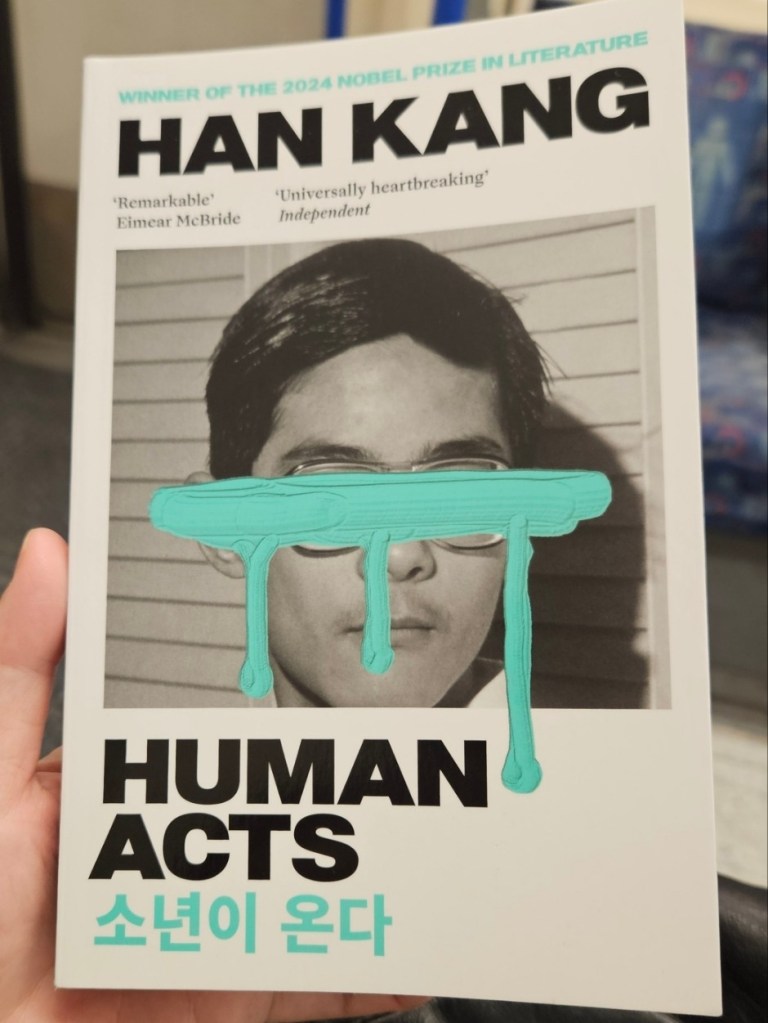
The change has also been noticeable in everyday conversations. People I meet now casually ask me about Korean dramas, K-pop or Korean food.
The funny thing is, I’m not particularly into K-dramas or K-pop myself, so they often know far more about the latest Korean entertainment trends than I do!
I used to introduce Korea to people. Now they’re often the ones introducing me to the latest Korean craze.
And Then Came KPop Demon Hunters
In 2025, Netflix’s KPop Demon Hunters took things to another level.
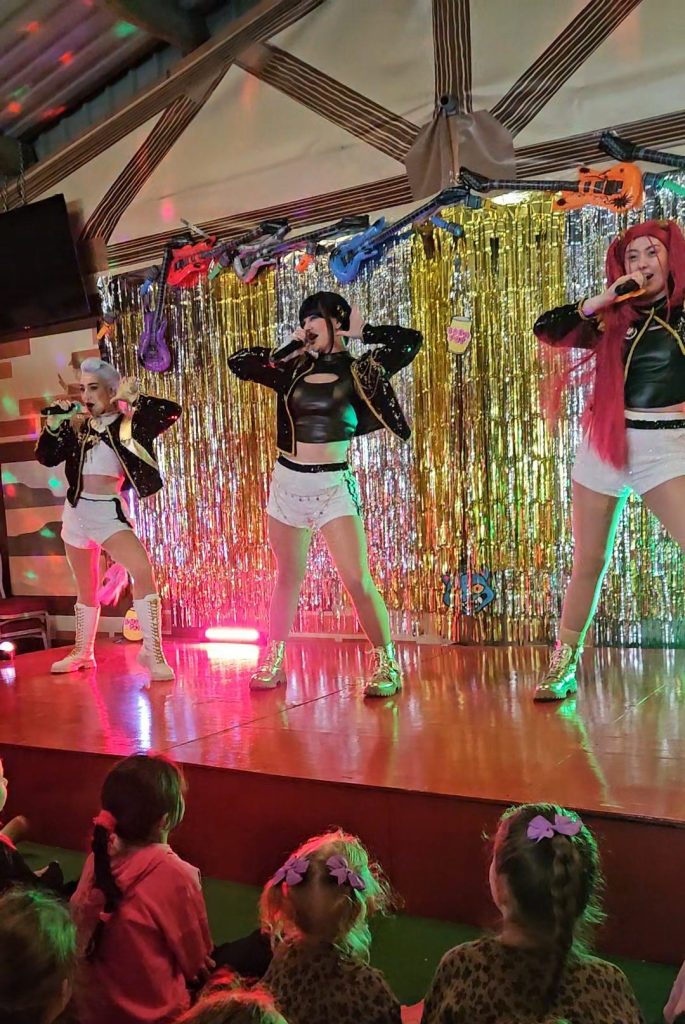
What fascinated me wasn’t simply its popularity, but how it introduced Korean culture to a much younger generation. Suddenly, children in Britain as young as four or five were talking about Korean characters, songs and food.
Children my daughter’s age!
At first, I wasn’t sure the film was suitable for my four-year-old, so I held off showing it to her. But seeing how popular it was among her friends made me curious, and eventually we watched it together.
She absolutely loved it. And thanks to her, I’ve finally found myself caught up in a Korean pop culture craze too!
I particularly enjoyed pointing out the Korean elements throughout the film, explaining familiar words, food and cultural references. She seemed delighted to recognise things from her own Korean background.
One of my favourite moments was when we were listening to Golden. I told her that, unlike most of her friends, she could sing the Korean lyrics properly because she actually spoke Korean. Seeing how proud that made her was rather special.
As a Korean mum raising a multilingual child in the UK, I spend a lot of time encouraging her to use Korean. So watching her feel proud of the language because it was suddenly something her friends were excited about was a lovely change.
K for Kimbap?!
Recently, I came across a KPop Demon Hunters annual in a British bookshop.
I opened it to find an alphabet page featuring Korean words, including “K is for Kimbap”, alongside hoobae and maknae.
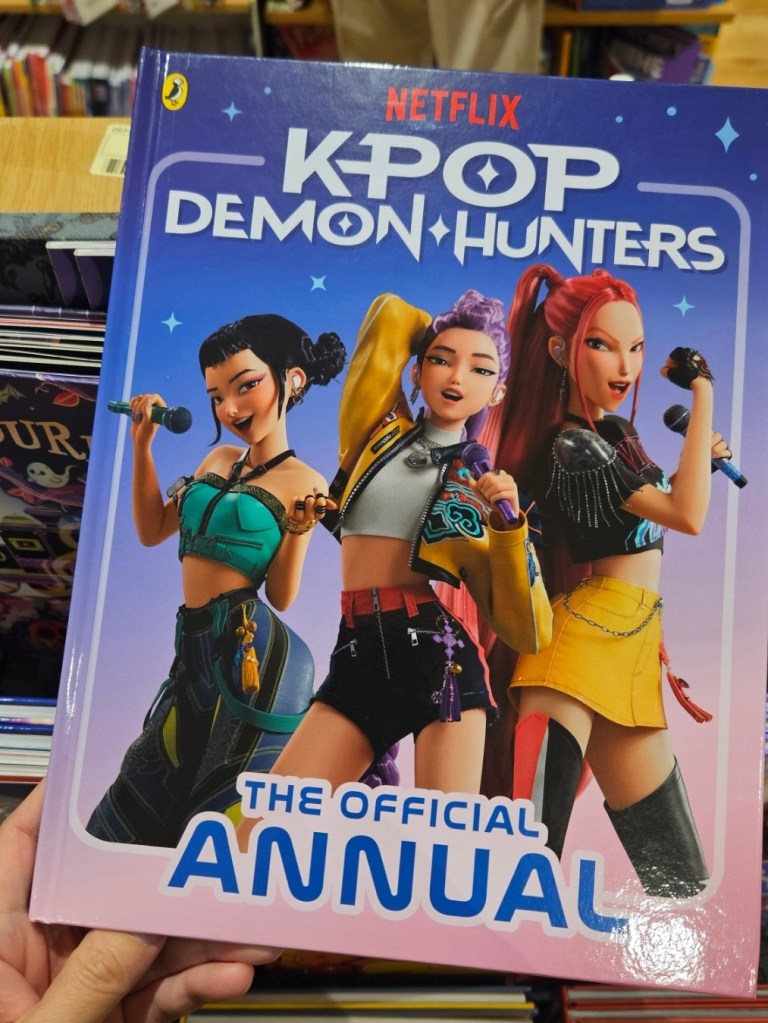
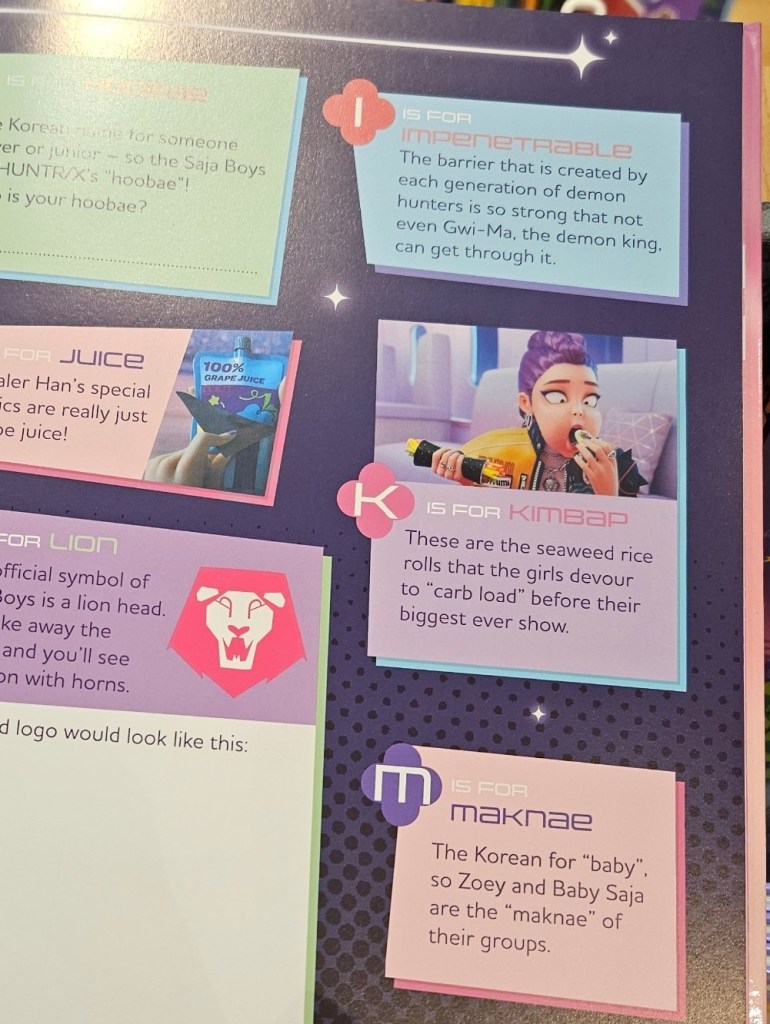
I couldn’t help laughing. Since when did kimbap become something you’d find in a British children’s book?!
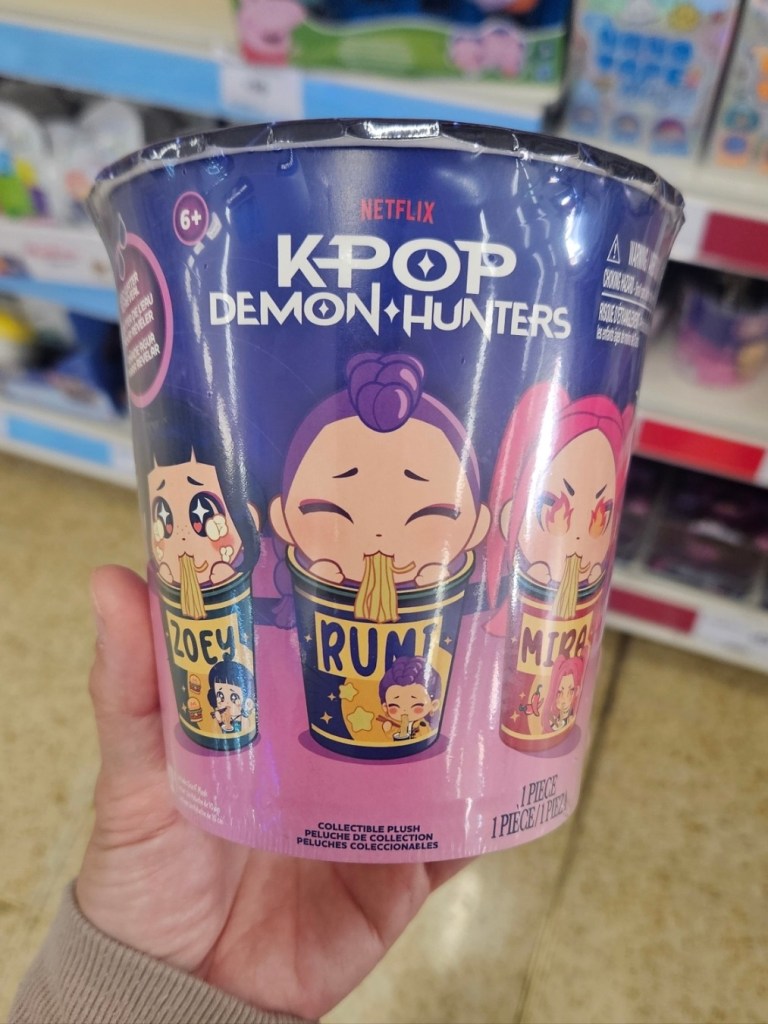
And it’s not just books. Supermarkets and shops are full of KPop Demon Hunters merchandise, from activity books to toys. One particularly amusing discovery was a surprise toy packaged like a cup of Korean instant noodles.
I couldn’t help remembering the days when I had to order actual Korean instant noodles from Bournemouth and wait for the monthly delivery.
13 years later, I’m finding toy versions of them in British shops!
A New Generation Growing Up with Korean Culture
My Spanish husband grew up watching Japanese anime such as Dragon Ball and Captain Tsubasa (known as Campeones in Spain). Like many European children of his generation, he became familiar with elements of Japanese culture through the cartoons he loved.
I wonder if we’re now seeing something similar happening with Korean culture.
For years, people discovered Korean culture through music, dramas or food. They actively sought out something new and different.
But now, some Korean cultural references are becoming part of what young children grow up with. A four-year-old in Britain might encounter Korean words through a favourite song, recognise kimbap from a book or become familiar with Korean food through a toy.
Of course, enjoying KPop Demon Hunters doesn’t necessarily mean understanding Korean culture. But it creates a familiarity that wasn’t always there.
Just as Japanese animation helped make Japan feel familiar to my husband growing up in Sapin, perhaps Korean stories, music and characters will help shape how my daughter’s generation sees Korea.
When I think back to arriving in Britain in 2013, struggling to find Korean groceries and meeting people who knew little about Korea, the contrast is remarkable.
My daughter is growing up in a very different Britain, one where her friends sing songs with Korean lyrics and she gets to be the one who knows what those words mean.
I don’t know what the next Korean cultural phenomenon will be. But I find it fascinating that Korea is no longer simply a country people discover through popular culture. Elements of its culture are becoming familiar to a generation growing up thousands of miles away.
And somehow, “K for Kimbap” sums it all up.


Leave a Reply