
Most museums in Seoul have a separate space designed specifically for children.
These aren’t usually just small play corners either. Many have proper interactive exhibitions where children can touch, climb, experiment and learn about the subjetc of the main museum in a much more accessible way.
Even better, many are free. The catch? Free doesn’t necessarily mean you can simply turn up. Some require advance reservations, and popiular weekend or school-holiday sessions can be competitive.
I thought I’d introduce a few of the children’s museums we’ve visited in Seoul, starting with one we’ve now been to four times: the Children’s Museum at the National Museum of Korea.
Children’s Museum at the National Museum of Korea
The National Museum of Korea is worth visiting in its own right. It’s Korea’s flagship museum, with an enormous collection spanning prehistoric Korea, ancient kingdoms, Buddhist art, calligraphy, ceramics and much more.
If you’re visiting with younger children, however, I’d definitely consider combining the main galleries with the Children’s Museum.
The museum officially describes the Children’s Museum as being primarily aimed at children aged 5-9. Our daughter has been several times from a younger age, though, and has always found plenty to enjoy.
Admission is completely free, but you must reserve online in advance. There are no walk-in tickets. Reservations open at midnight 14 days before your chosen date, and you can book for up to five people at once. Everyone needs to be included in the reservation, even babies and toddlers.
During the 2026 summer holiday period, the museum is running six sessions a day, most lasting 1 hour 20 minutes. The schedule changes at other times of year, so I’d check the official website.
Making a Day of It
We booked the 2pm session on a Saturday, which worked nicely because it gave us the morning to explore the main museum before having lunch and heading over to the Children’s Museum.
Entry to the National Museum’s permanent collection is also free, so you can easily combine the two without buying another ticket.
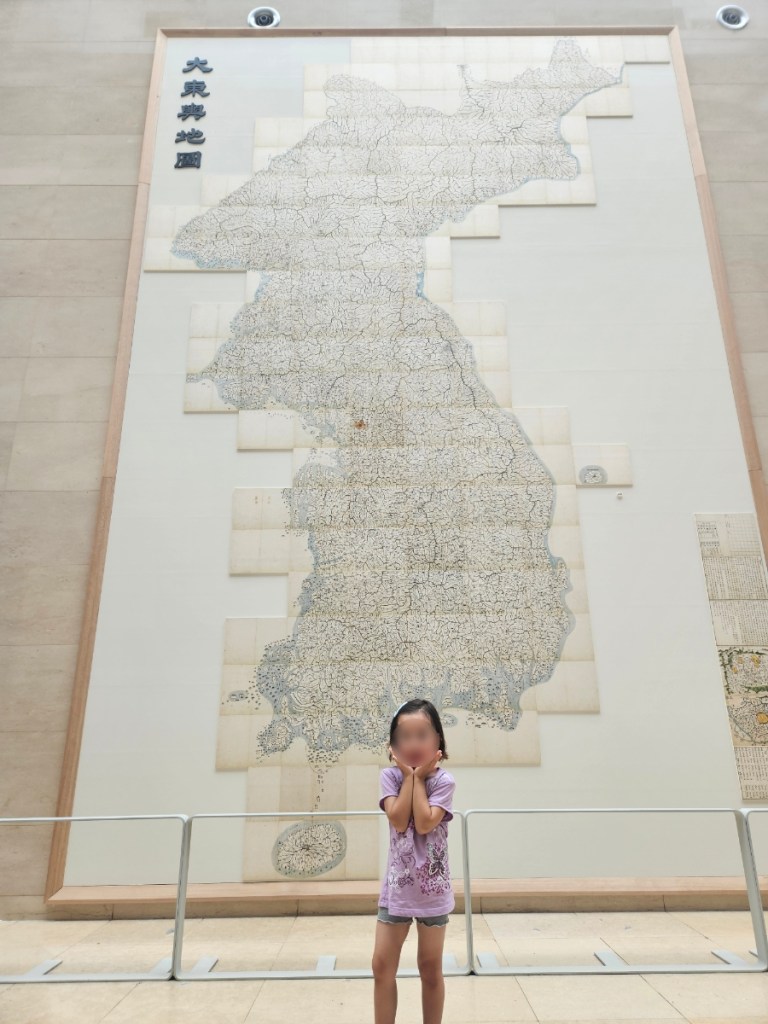
As soon as you enter the vast central hall, there are two things that are difficult to miss: a reproduction of the enormous Daedongyeojido (대동여지도), or Territorial Map of the Great East, and the spectacular Ten-story Stone Pagoda from Gyeongcheonsa Temple (개성 경천사지 십층석탑).

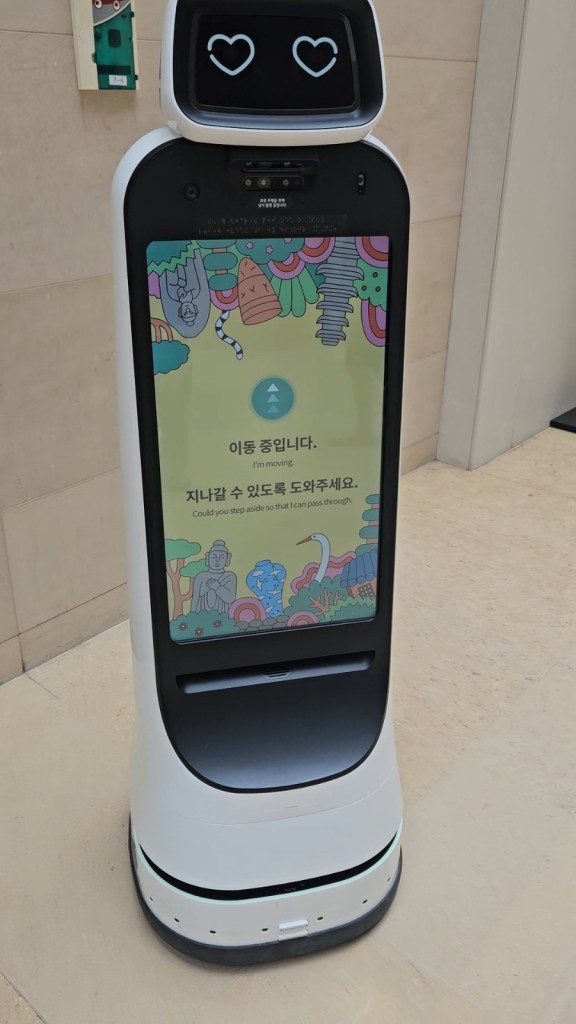
Our four-year-old, naturally, was far more interested in the robots.
Robot guides roam around the museum’s main hall, complete with touchscreens where you can choose the gallery or object you want to find. And they don’t just display directions—they actually set off through the museum while you follow behind!
Needless to say, following a robot around the National Museum was considerably more exciting to her than Mum and Dad attempting to explain Korean history.
A Note About Food
One practical thing worth knowing if you’re visiting with young children is that food isn’t allowed inside either the permanent exhibits or the Children’s Museum itself. There are lockers in the waiting area where you can leave belongings during your session.
We’d brought a few snacks for our four-year-old—carrot and cucumber sticks and a carton of milk—and were allowed to bring them through security on this occasion, although we were reminded about the museum’s food restrictions.
I’d therefore avoid relying on being able to carry snacks through the galleries and plan a proper food break instead.
Lunch Before Our Session
After around two hours exploring the main museum, we were definitely ready for lunch for our 2pm booking.
There ares several places to eat within the museum grounds. The most casual option is the Food Court, which serves a mixture of Korean, Chinese and Western dishes, while Pagoda Restaurant by Doore offers mainly Korean food with some Western options. There’s also Mirror Pond Restaurant, an Italian restaurant overlooking the museum’s beautiful reflecting pond. For coffee and something lighter, you’ll find several cafés around the complex, including a Twosome Place and EDIYA.
You can, of course, leave the museum grounds to find more restaurants nearby, but I personally wouldn’t recommend doing that if you spend more time at the museum later in the day. The National Museum complex is huge, and what looks reasonably close on a map can involve quite a bit of walking. Going out for lunch and then coming all the way back can easily eat into your day, particularly with young children.
We therefore decided to stay within the museum grounds for lunch. What we hadn’t anticipated was just how busy the restaurants would be on a Saturday.
This was our fourth visit to the Children’s Museum but our first on a weekend, and I hadn’t expected such a long queue for the Food Court. We quickly walked over to the Mirror Pond Restaurant instead, only to discover that it was fully booked—even though there appeared to be plenty of empty tables at the time. So back to the Food Court we went.
Thankfully, it’s large and the queue moved much faster than it initially appeared. We managed to eat without having to sprint to our Children’s Museum session afterwards.
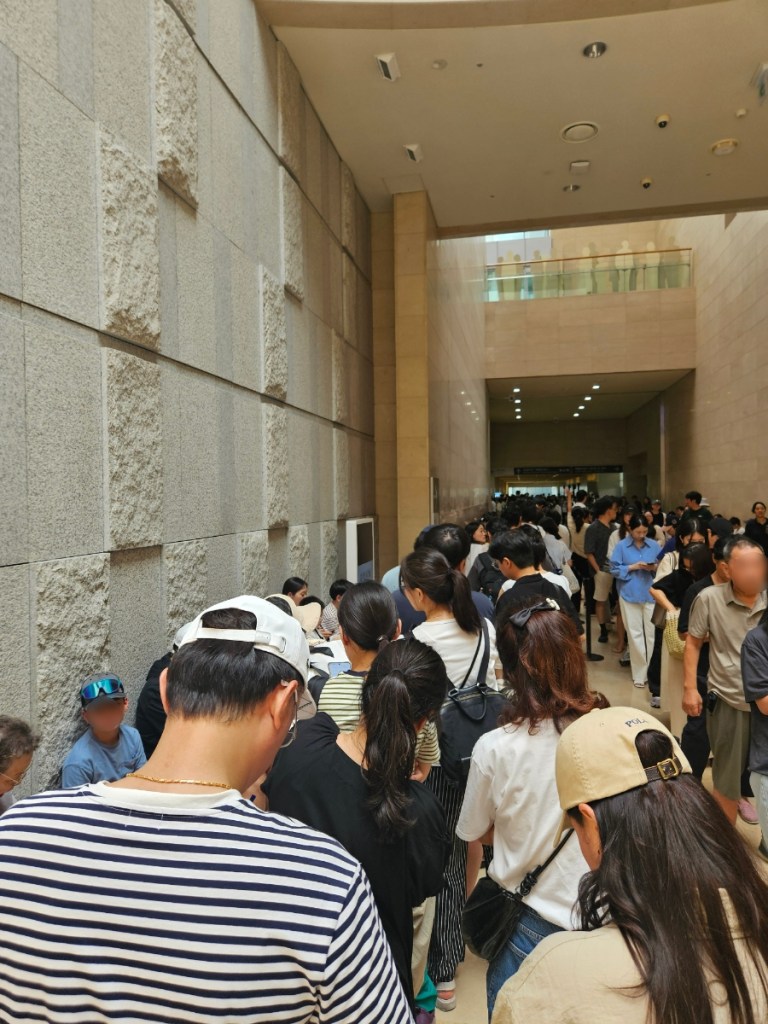

My tip: if you’re visiting at the weekend or during the school holidays and would prefer one of the sit-down restaurants, book ahead either the Mirror Pond Restaurant or the Korean one. Otherwise, I’d simply factor some extra time into lunch and use the Food Court.
Inside the Children’s Museum
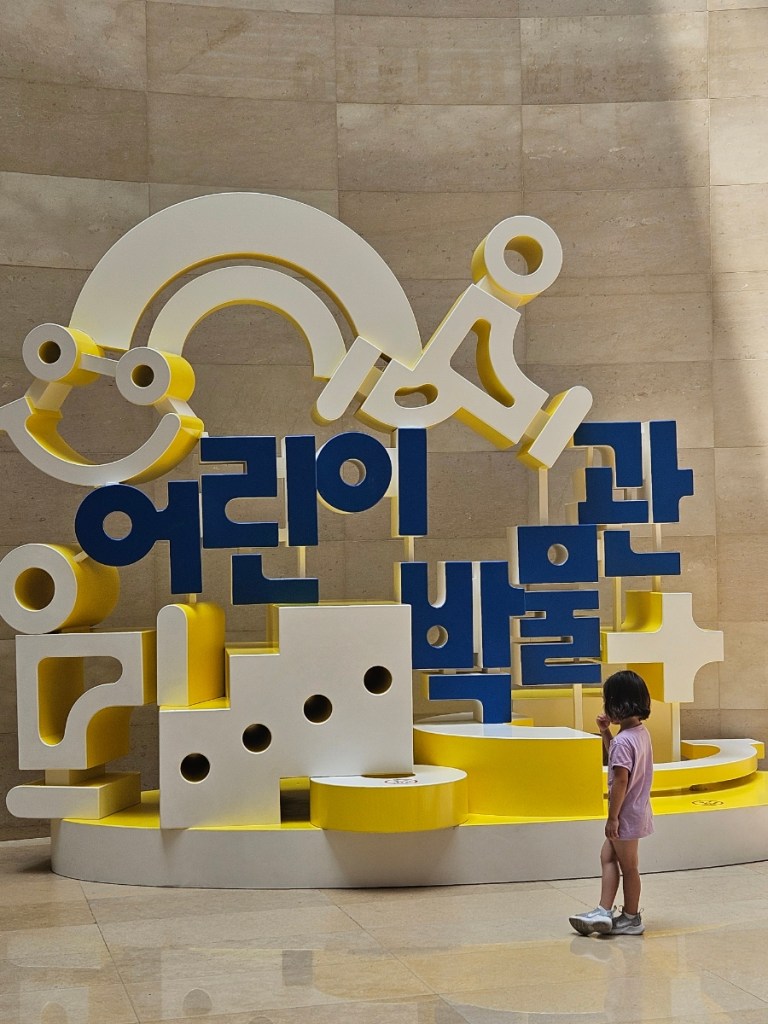
The children’s Museum takes elements of Korean history and culture and turns them into activities children can actually interact with.
There are permanent exhibitions, while other parts change periodically, so there’s usually something different to discover on repeat visits.
During our latest visit, one of the exhibitions was themed around the Korean table. Children could explore how a traditional Korean meal is put together and try hands-on activities inspired by older ways of preparing food, from processing rice to using a traditional millstone or mortar.
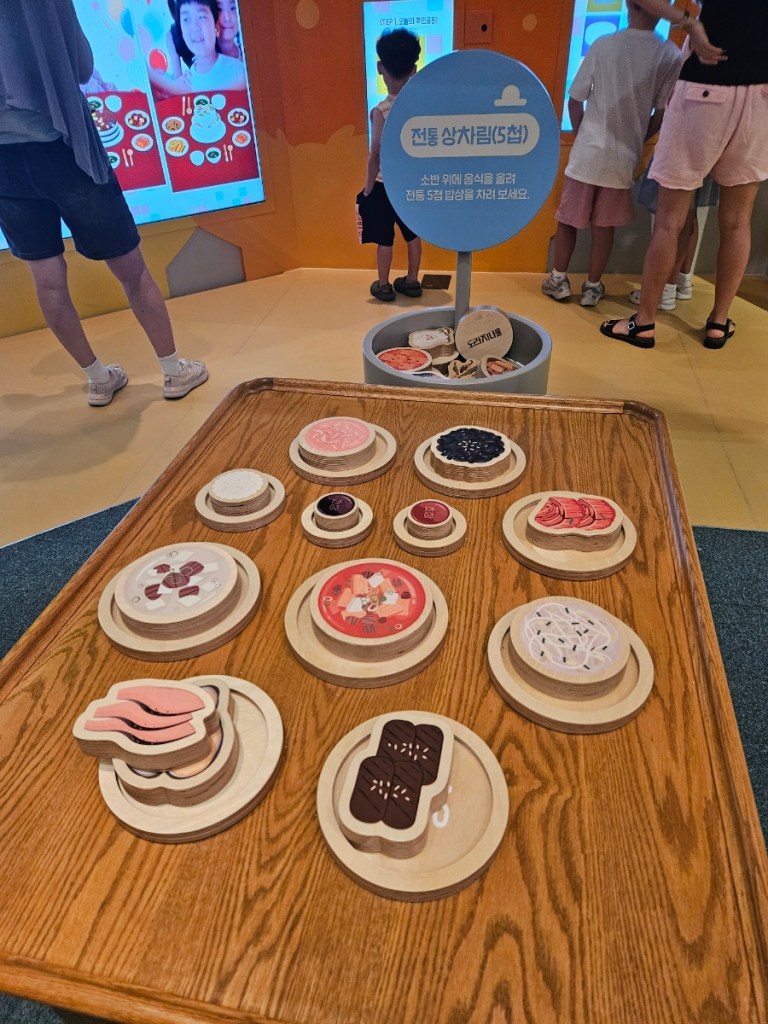

It’s exactly the sort of thing that works particularly well here. A four-year-old isn’t necessarily going to stand in the main galleries contemplating historical kitchenware, but let her turn a millstone herself and suddenly there’s a conversation to be had about how people used to prepare their food.
Our daughter’s favourite area, however, was one about constellations. Not necessarily because she had developed a sudden fascination with astronomy. Mostly because the exhibition included a structure with a slope that she could run up and down.


After spending the morning reminding a preschooler not to run through the National Museum, it was quite nice to finally be somewhere where a little running an giggling was perfectly acceptable!
Don’t Forget the Museum Grounds
Normally, we wouldn’t leave immediately after our Children’s Museum session.
The National Museum sits within surprisingly beautiful grounds, with a large reflecting pond, gardens, pagodas and other historical monuments scattered around the site. It’s worth allowing some extra time simply to wander outside, particularly in spring or autumn.
Just beyond the museum grounds is Yongsan Family Park, a large green space with lawns, walking paths and plenty of room for children to run around. It was actually part of a former US military golf course before being transformed into a public park, and today it feels like a peaceful green pocket tucked away from the busy city. We’ve wandered through it on previous visits, and it’s a lovely addition to a museum day when the weather is on your side.

This time, however, Seoul had other ideas. The temperature had climbed to around 35°C, and none of us was enthusiastic about an afternoon walk in the sun. We abandoned our usual wander around the grounds and headed to a nearby shopping centre for air conditioning instead.
I’Park Mall
I’Park Mall in Yongsan Station is easily accessible from both Yongsan and Sinyongsan stations. From Ichon, where the National Museum is located, Sinyongsan is just one stop away on Line 4.
It’s an enormous mall, and you’ll find pretty much everything here: restaurants and cafés, a cinema, fashion and beauty shops, electronics, furniture and plenty of entertainment. If you’re visiting with children, the 6th floor is particularly worth exploring, with several family-friendly shops and activities.
One of the attractions is Champion 1250X, which is somewhere between a soft play and an indoor adventure playground. Rather than being aimed purely at younger children, it focuses on more physical challenges, with activities including zip lines, high ropes, giant slides, and climbing walls.
I later became curious about the slightly unusual name. Apparently, the “1250” refers to 1,250 kcal, with the original concept being a place where children could climb, run, hang and jump their way through their recommended daily calorie expenditure. Suddenly the name made much more sense!
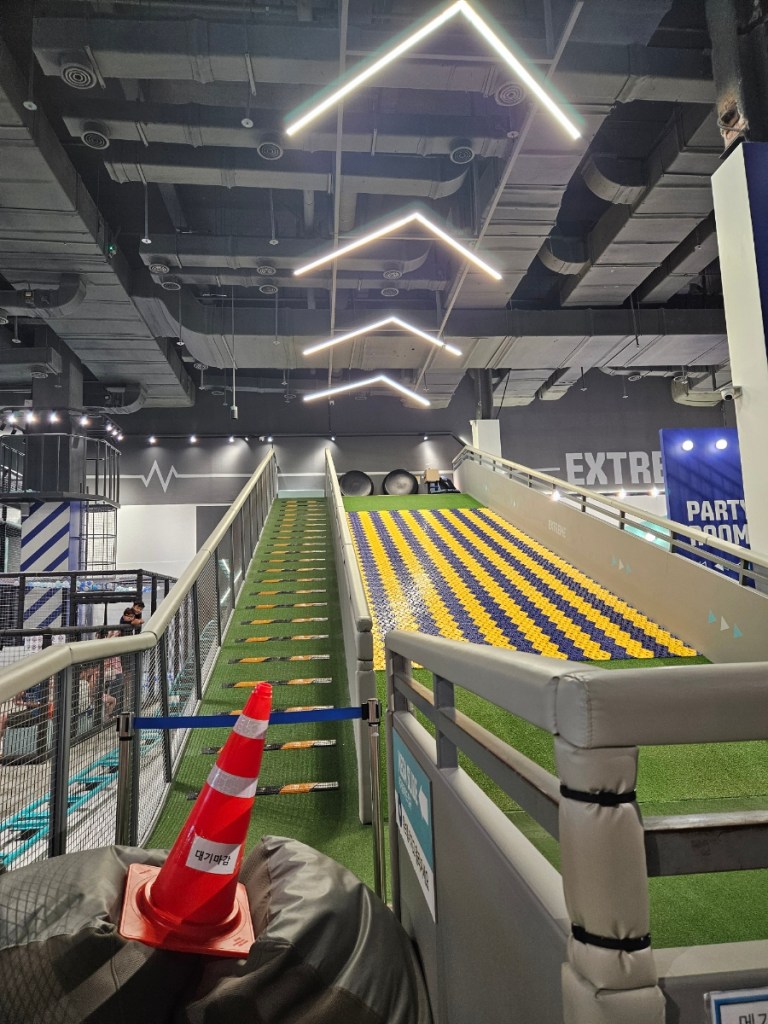
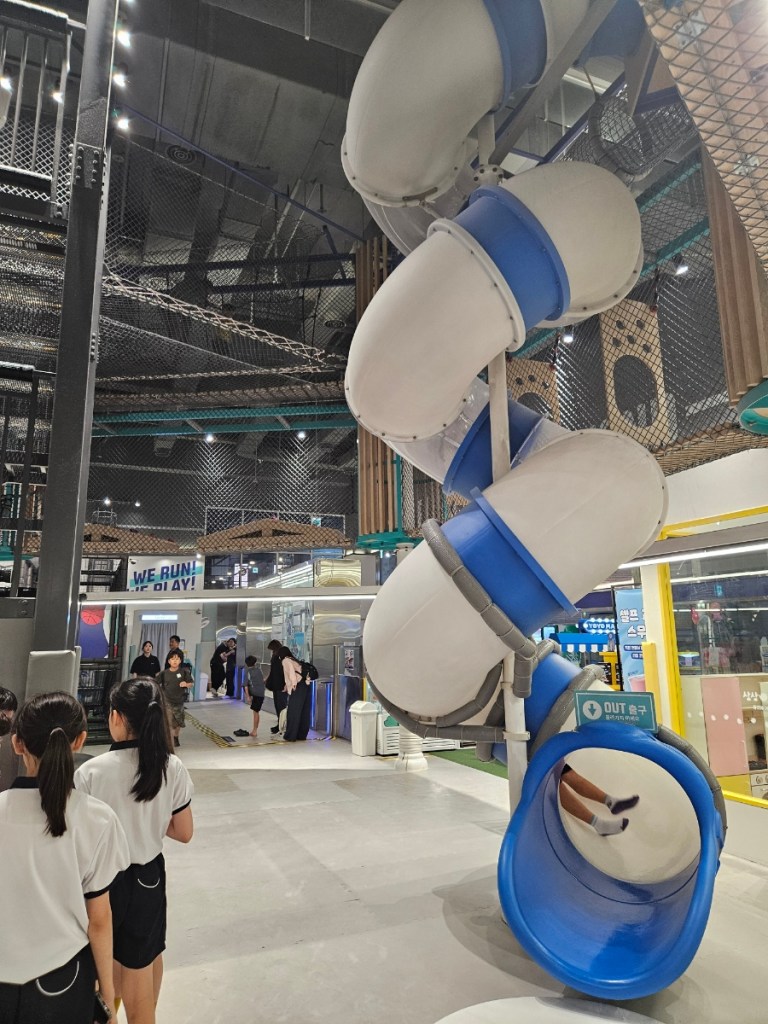
We actually visited Champion on a different day. Our usually active four-year-old found all the older children rushing around a little overwhelming and wanted to leave after about half an hour, which wasn’t ideal considering the admission price! For confident children who enjoy adventurous physical play, though, I can imagine it being a brilliant place to spend a couple of hours.
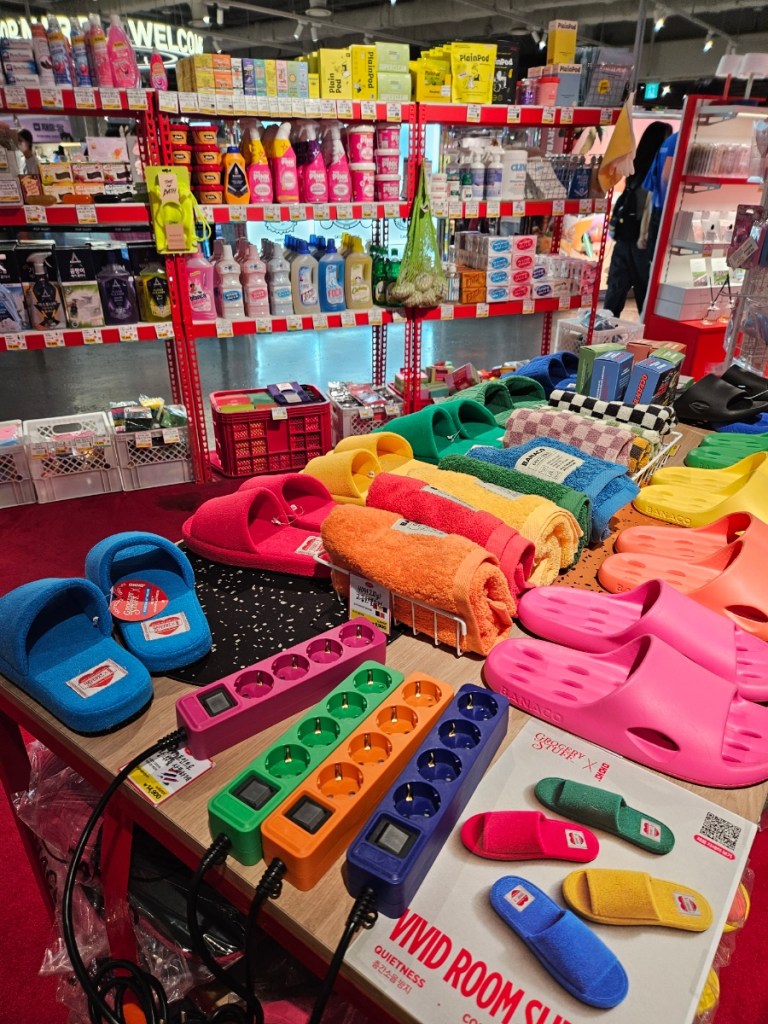
There are also plenty of character and toy shops around this floor, so simply walking through the mall can take considerably longer than expected when you have a preschooler with you.

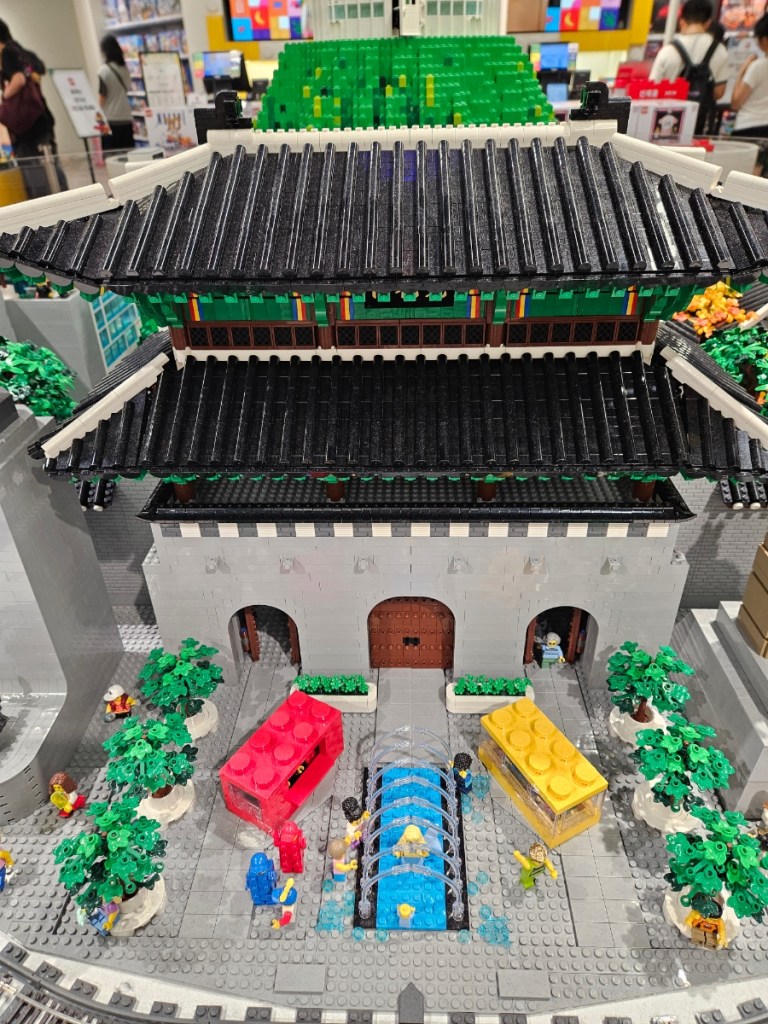
The LEGO Store alone kept us occupied for nearly an hour. I loved seeing LEGO models of familiar Seoul landmarks, including N Seoul Tower and Gyeongbokgung Palace. It was a fun little Korean touch that made this branch feel different. Our daughter, meanwhile, played with sample bricks and made her own creations.

Eventually, we stopped at café Doré Doré for something sweet. It’s best known for its colourful rainbow cakes, although our daughter opted for a smaller cake and a watermelon juice instead. Both were a big success as she finished them all!
There was also a Crayon Shin-chan pop-up store running on a different floor during our visit, which was absolutely packed. Pop-ups change regularly, so it’s worth checking what’s on.
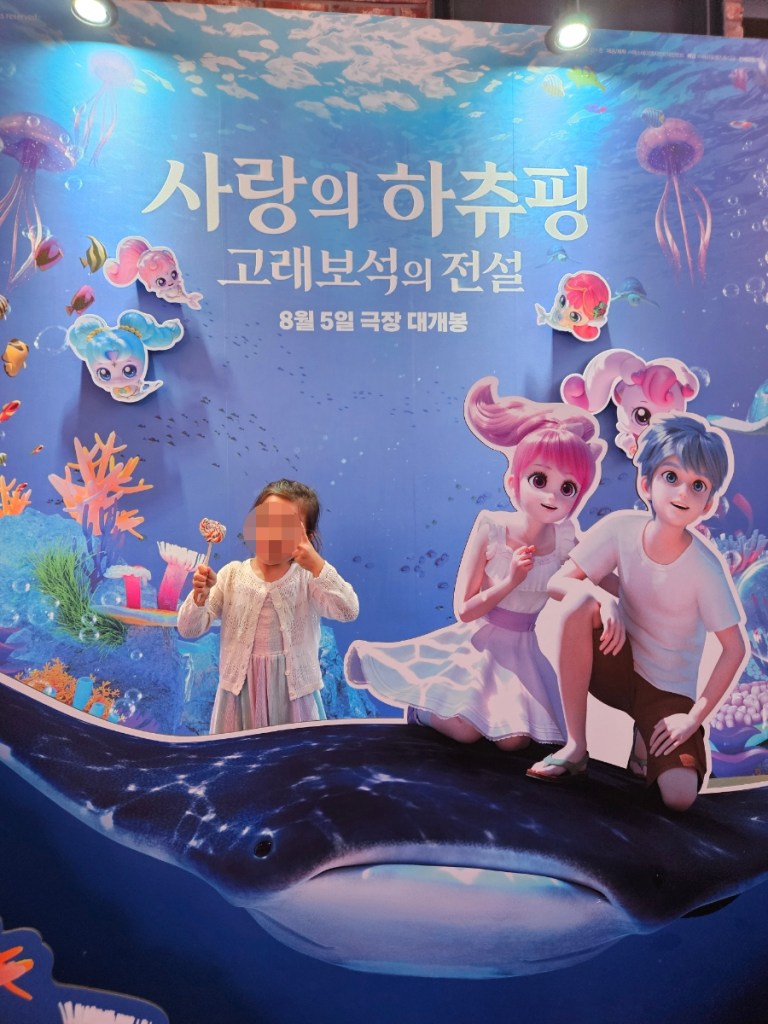
Overall, I’Park Mall worked really well as an afternoon escape from Seoul’s summer heat, particularly after spending the morning at the museum. Just bear in mind that everyone else has the same idea: on hot or rainy weekends, the mall can get extremely busy.
Overall
The National Museum of Korea can easily feel like an ambitious place to tackle with a preschooler, but combining a littie time in the main galleries with a booked Children’s Museum session worked really well for us.
If the weather is pleasant, I’d leave some time afterwards to explore the museum grounds. On a scorching or rainy day, though, heading to I’Park Mall makes an easy alternative. Either way, with a little planning around the Children’s Museum reservation and lunch, you can comfortably turn a visit here into a full family day out.


Leave a comment