
We’re spending the summer holidays in South Korea and trying to explore a different corner of Seoul each weekend. This time, we headed to HiKR Ground, followed by Cheonggyencheon, Gwanghwamun Square, and the exhibitions beneath Sejong Centre.
It turned into one of those days perfectly mixed modern Korea with its history—plus plenty of opportunities for four-year-old to cool off in the summer heat.
HiKR Ground
Our first top was HiKR Ground, a free interactive visitor centre operated by the Korea Tourism Organisation.
Rather then being a traditional tourist information centre, it’s designed to showcase modern Korean culture through immersive exhibitions, digital art and interactive experiences. Even if you have no intention of picking up maps or brochures, it’s well worth a visit.
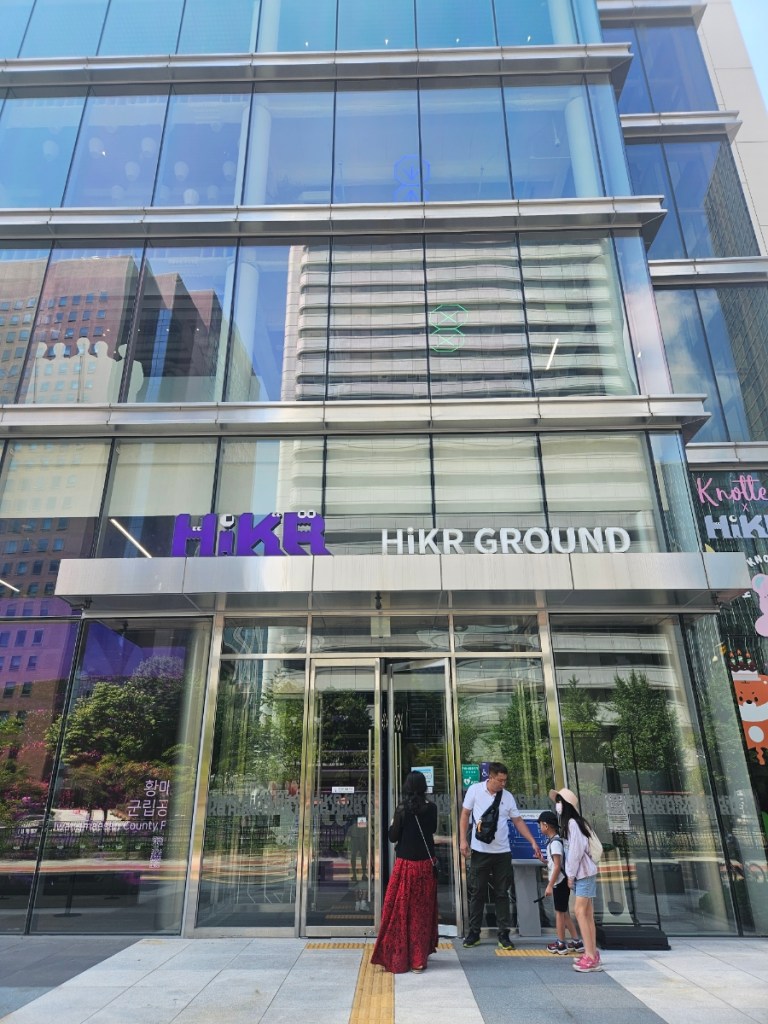
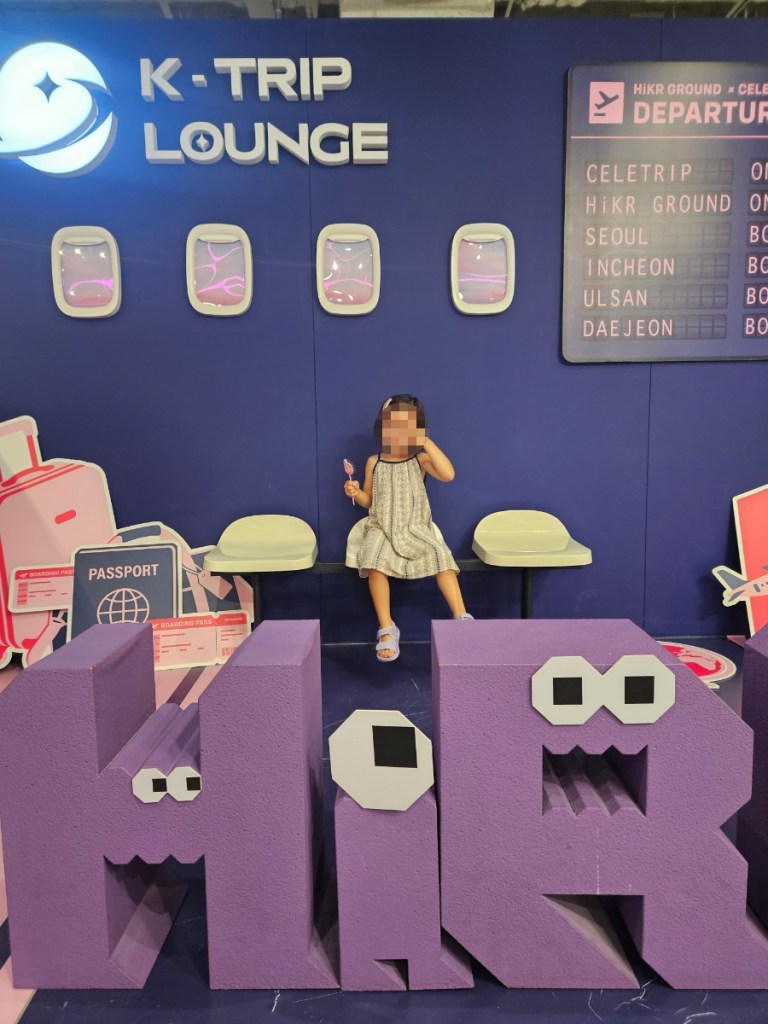
Just a heads-up: if K-pop means KPop Demon Hunters to your child—as it currently does to our four-year-old—this isn’t quite that kind of K-pop attraction.
Before we arrived, I had to gently explain that Rumi and Jinu wouldn’t actually be waiting for her, despite the building being entirely K-pop themed. She’d genuinely been hoping to meet them somewhere in Seoul!
The building was also a welcome escape from the summer heat. Situated right beside Cheonggyecheon, stepping into the air-conditioned lobby immediately felt refreshing.
We began on the second floor before gradually making our way upstairs.
The second floor was easily the highlight. It’s designed like a K-pop stage, complete with giant LED screens, changing coloured lights and visual effects in the background. Visitors can choose songs, change the lighting, and record themselves dancing as if performing on stage.
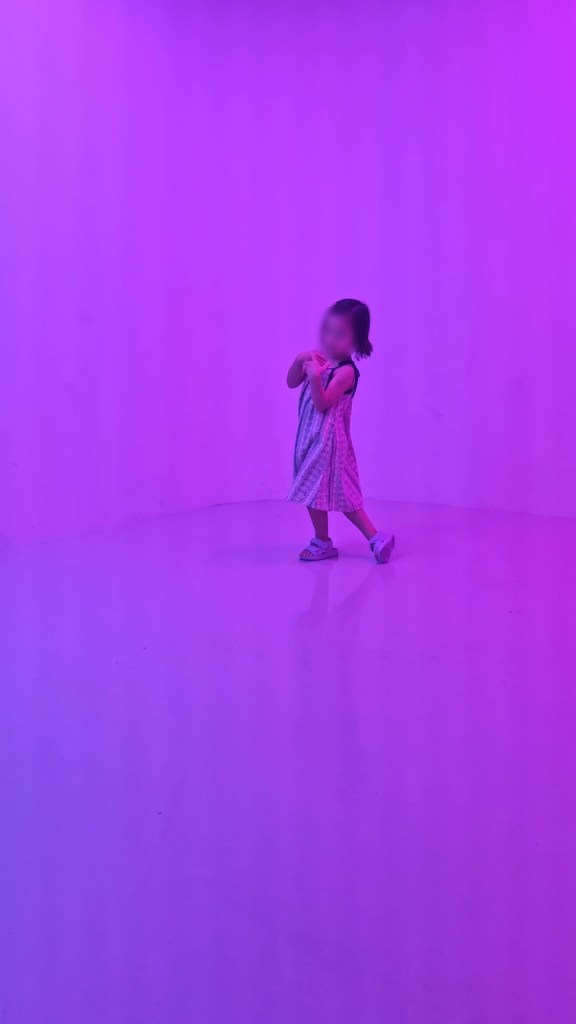
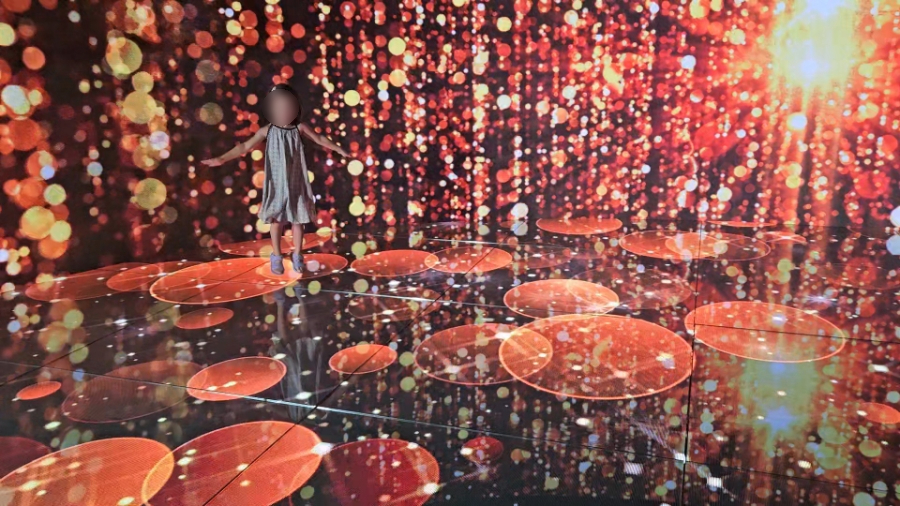
Our daughter happily danced along to whatever happened to be playing. Meanwhile, I found myself watching the local children, many of whom already knew entire K-pop dance routines and performed them with remarkable confidence. It certainly gave the impression that copying K-pop choreography is a big part of growing up for many children in Korea.
The upper floors showcase different aspects of Korean culture, including a noraebang (노래방, Korean-style karaoke room) and a variety of digital installations. We enjoyed wandering around, although I personally found the second floor to be the most memorable.
We spent around an hour there before heading back outside.
Cheonggyecheon Summer Water Play
HiKR Ground overlooks Cheonggyecheon (청계천), the 11-kilometre stream that runs through central Seoul.
Originally covered by roads and an elevated motorway, the stream was restored in the early 2000s as one of Seoul’s best-known urban regeneration projects. Today, it’s one of the city’s most popular places to escape the traffic and enjoy a walk.
Before travelling, I’d seen on Instagram that part of the stream had been transformed into a children’s water play area for a limited-time summer event.
We were pleasantly surprised to find that water shoes were available to borrow free of charge. After picking up a pair, we got our daughter changed into her swimsuit and she was straight into the water.
(A little tip if you’re visiting Seoul during the summer: always carry a swimsuit for young children. We do exactly the same in London, because you never know when you’ll stumble across splash fountains or water play areas, and Seoul has plenty of them during the hotter months.)
The stream bed is covered with fairly large stones, so we had to remind her not to get too carried away while running around, but it was incredibly refreshing to stand in the cool water after walking through Seoul in the August heat.
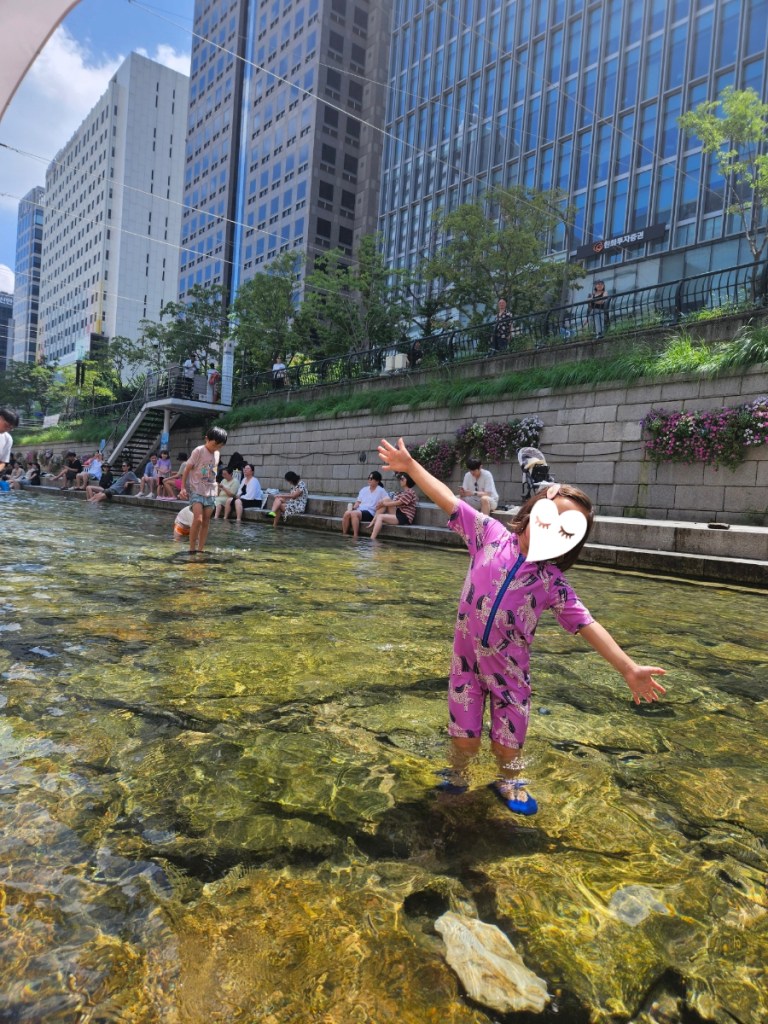
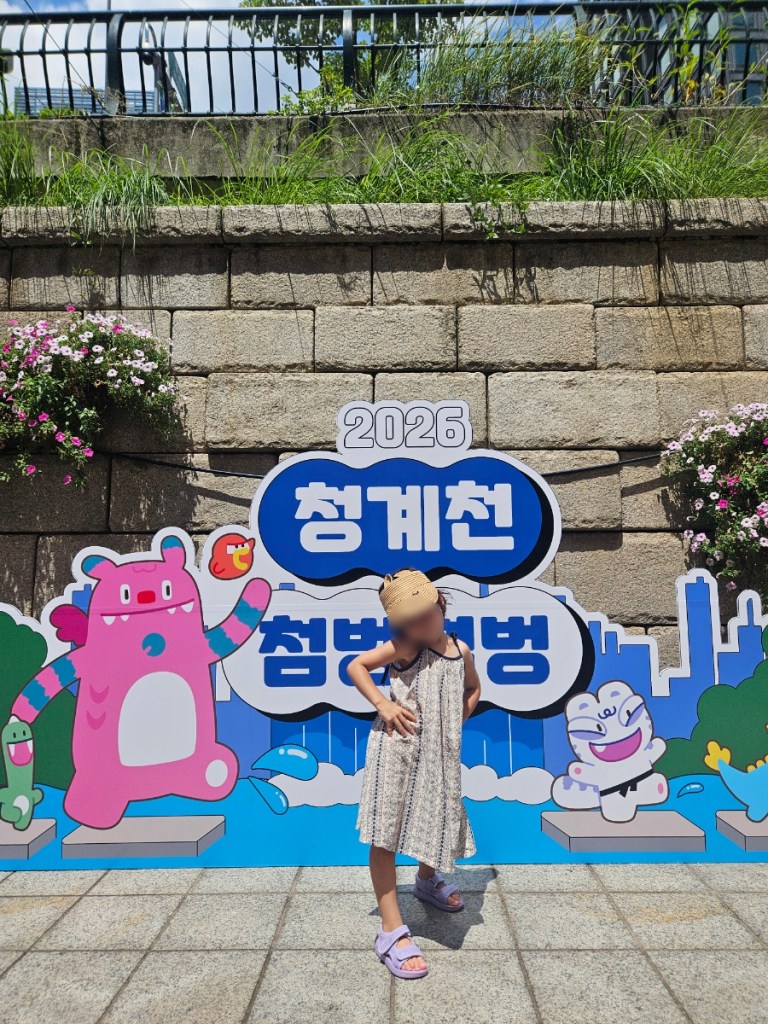
We’d planned to spend about fifteen minutes there before lunch, but an hour later, we were finally persuading her to leave.
Lunch at Chinese Restaurant
From there, we walked to Gwanghwamun Square (광화문광장) for lunch at one of our favourite restaurants in Seoul.
Our destination was Chinee, a Chinese restaurant tucked away on the basement level of the Sejong Centre for the Performing Arts (세종문화회관).
This was actually our third visit. We almost always order the sweet-and-sour pork (tangsuyuk 탕수육), which has become something of a routine whenever we’re nearby.
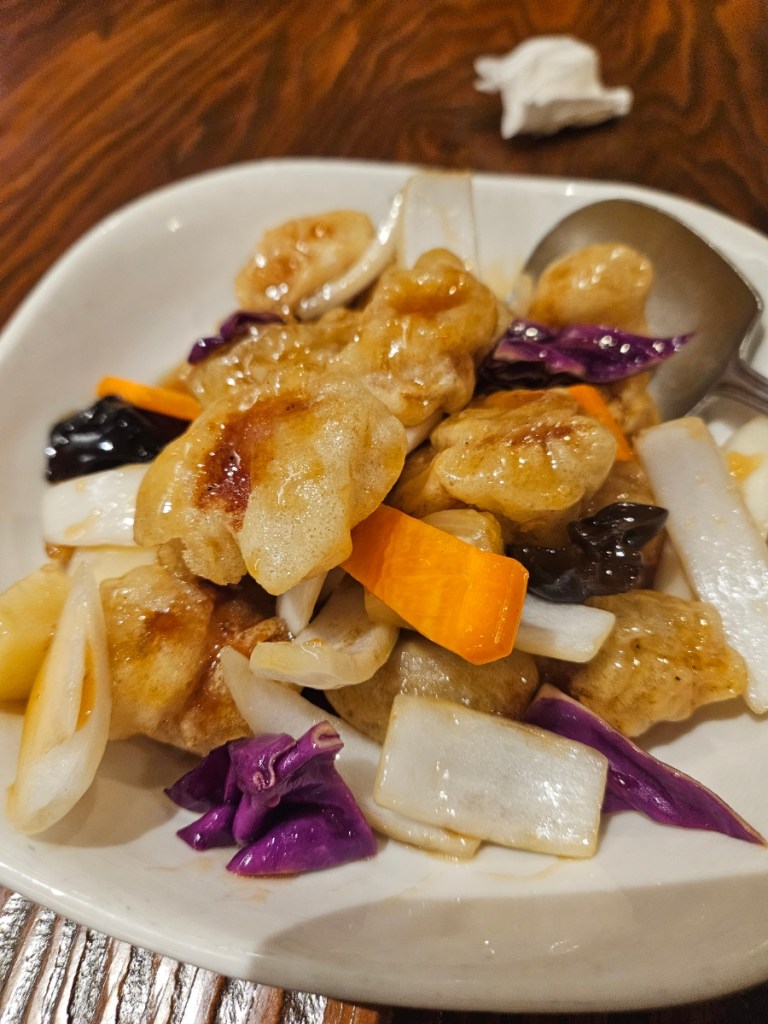
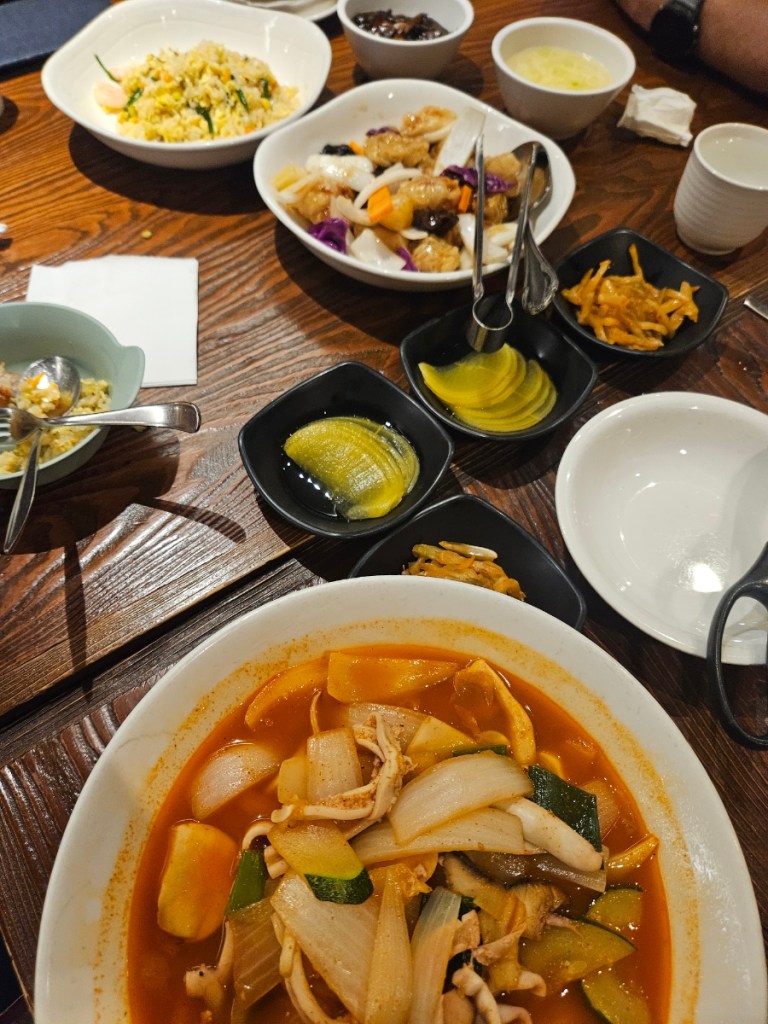
This time, though, the batter seemed thicker, while the piece of pork were a little smaller than on our previous visits. It was still an enjoyable meal. We also ordered the jjamppong (짬뽕, spicy seafood noodle soup) and the prawn friend rice, both of which were perfectly nice. That said, I noticed the restaurant’s Google reviews are a little more mixed than I’d expected, so it may be worth having a quick look before deciding whether it’s the right choice for you.
Gwanghwamun Square
After lunch, we explored the exhibitions beneath Gwanghwamun Square.
Standing above the square are two of Korea’s most recognisable statues: Admiral Yi Sun-sin, the naval commander famous for his victories against Japanese invasions in the 16th century, and King Sejong the Great, who created the Korean alphabet, Hangul.
Beneath each statue is a free exhibition introducing their lives and achievements.
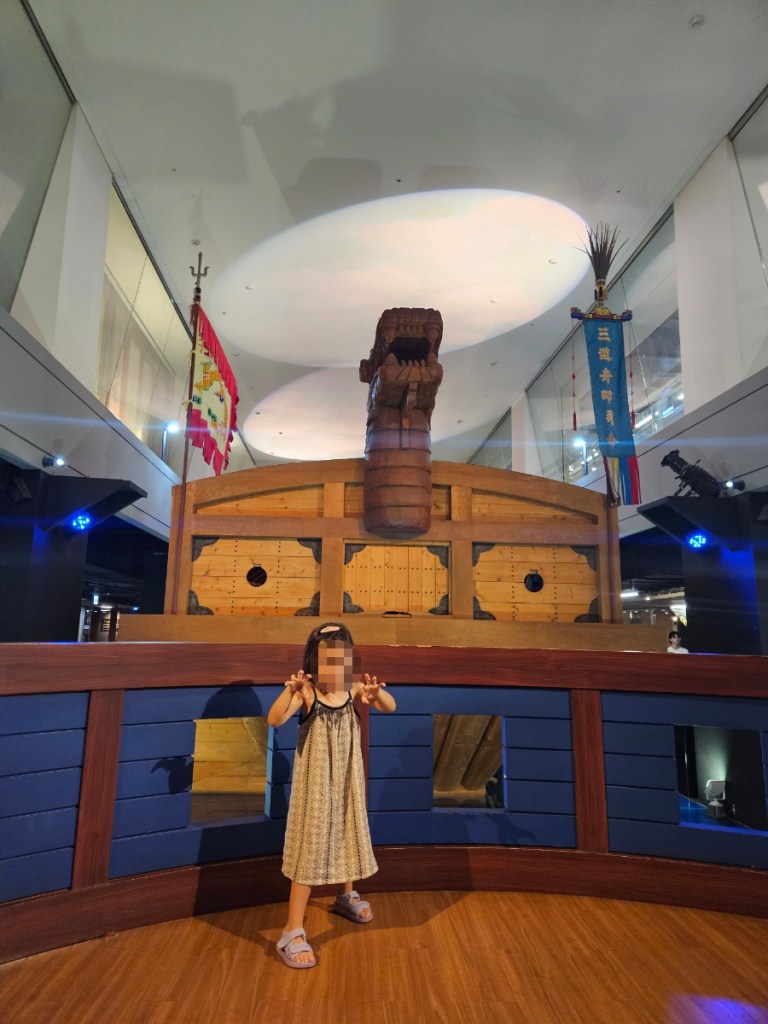
Our daughter especially enjoyed the exhibition dedicated to Admiral Yi.
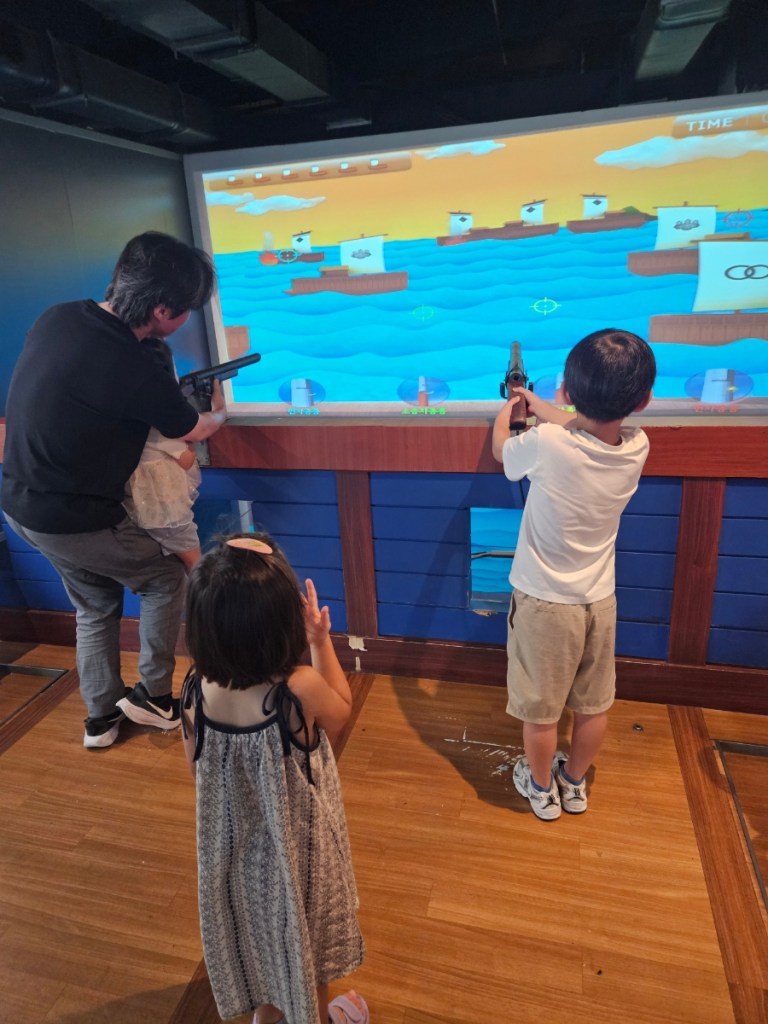
Alongside a model of his famous turtle ship (geobukseon 거북선)—an armoured warship that has become one of Korea’s national symbols—there were several interactive exhibits where children could try raising sails, rowing a ship and learning how naval weapons worked.
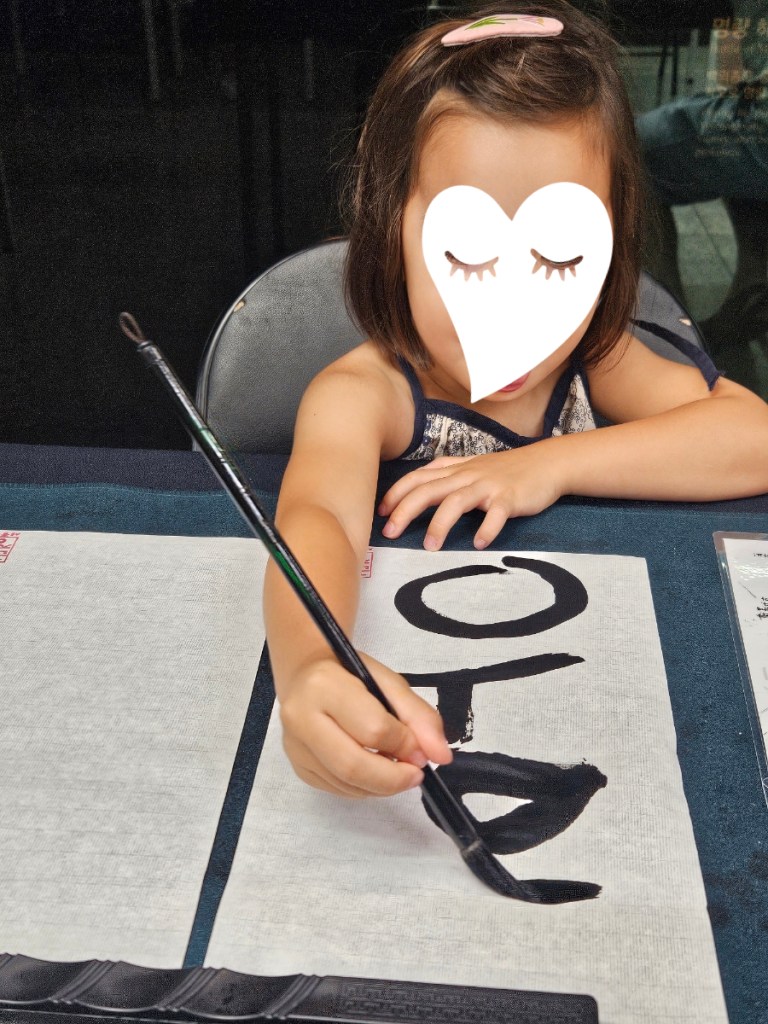
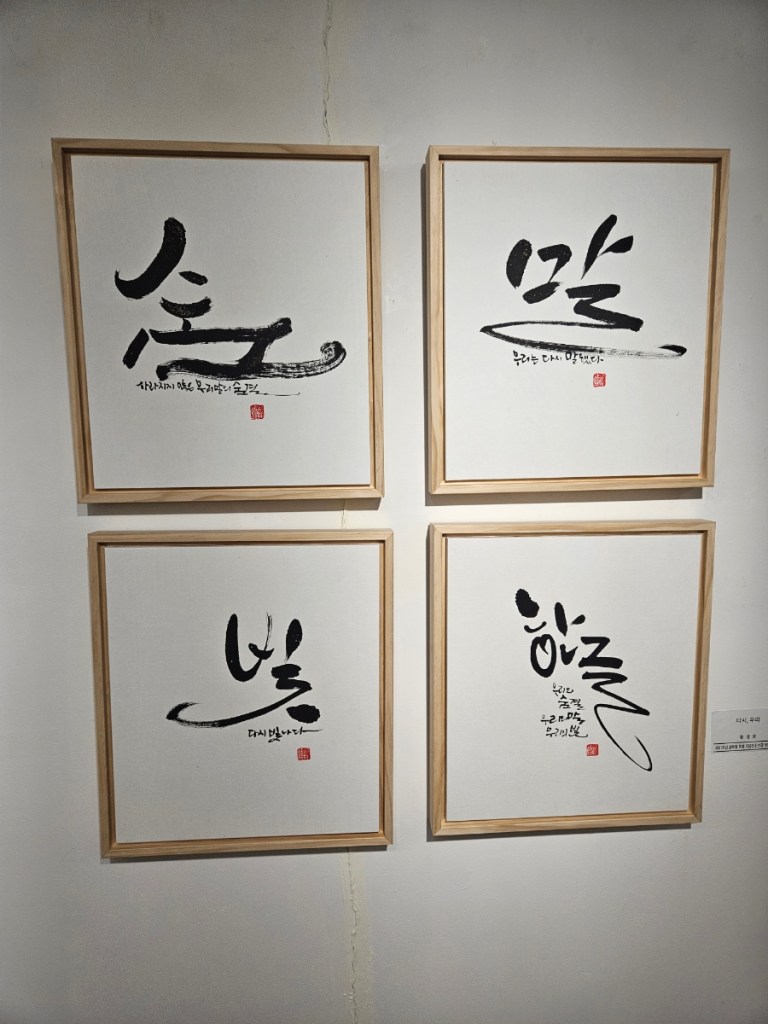
As we made our way towards the King Sejong exhibition, we also came across a lovely hands-on calligraphy activity celebrating Hangul as an art form. Visitors could practise writing Korean characters with a traditional brush, and our daughter thoroughly enjoyed giving it a go.
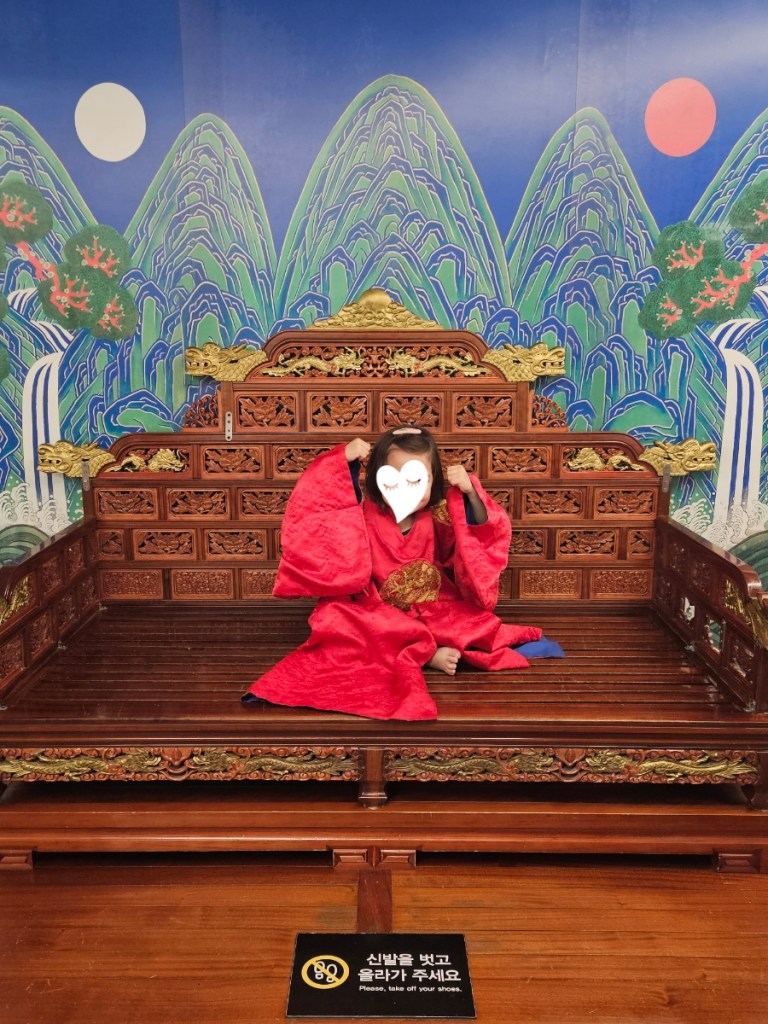
The King Sejong exhibition itself had a quieter atmosphere, with displays about the invention of Hangul, a small reading area, and a photo spot where visitors could dress as the king.
We enjoyed a small exhibition of contemporary artworks inspired by the Korean alphabet. During our visit, two of the artists were there in person, writing visitors’ names in beautiful calligraphy. Our daughter wad delighted to have her name written for her, and it became one of her favourite souvenirs from the day.
One Last Stop… or So We Thought
Before heading home, we stopped for coffee in the same building and planned to finish the day with a visit to Kyobo Book Centre, one of Seoul’s largest and most famous bookshops.
Unfortunately—or perhaps fortunately for our daughter—we never quite made it.
The fountains in Gwanghwamun Square proved impossible to resist. In fact, this has become one of our family’s little traditions whenever we visit Seoul in the summer. We almost always stop by the area to let her splash around for a while.
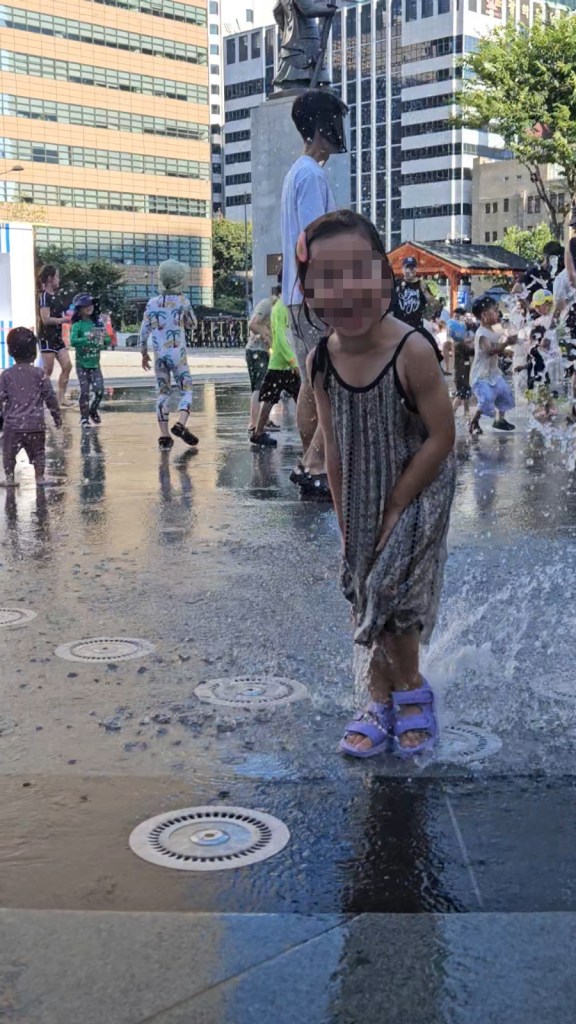
By the time she’d finished running through the fountains, she was completely soaked, happily exhausted, and more ready to call it a day.
Overall
What I enjoyed most about this itinerary was how naturally it unfolded on such a scorching summer day.
Within a few hours, we’d gone from dancing on a K-pop stage to cooling off in Cheonggyecheon, exploring Korean history, and finally ending the day with our daughter running through the fountains at Gwanghwamun Square!

 Multilingual Family in London
Leave a comment