
We’re currently spending the summer holidays in South Korea and have been trying to explore a different family-friendly destination each weekend. If you’re visiting Seoul with young children, I hope these itineraries give you a few ideas!
One Saturday, we spent the day around Hyehwa, starting at the National Children’s Science Centre (국립어린이과학관) before exploring the surrounding neighbourhood, including Marronnier Park. Our original plan was to finish the day at Changgyeonggung Palace, although jet lag eventually got the better of us!
Exploring the Museum
Located a few minutes’ walk from Hyehwa Station (Line 4), the National Children’s Science Centre is specifically designed for younger children and is an excellent indoor activity for preschoolers.
Almost everything here encourages children to touch, experiment and learn through play, making it easy to spend a couple of hours without anyone getting bored.
I recommend booking your tickets online in advance, especially for weekends. Although you choose a date when booking, entry isn’t timed, so you can arrive whenever is most convenient during opening hours.
We arrived at around 10am, and it was pleasantly quiet. The museum gradually became busier towards lunchtime, but it never felt overcrowded.
You enter via the first floor (labelled 2F in Korea, as the ground floor is considered 1F). One of the first galleries is dedicated to dinosaurs, where we happened to arrive just as a member of staff was about to begin a short interactive talk.
No reservation was required—you simply turn up at the scheduled time. The session was entirely in Korean, but the presenter did a fantastic job of keeping the children engaged. Even as adults, we learned a few interesting dinosaur facts along the way. If your child understands Korean, I’d definitely recommend checking the timetable when you arrive.


Most of the exhibition panels throughout the museum are also written only in Korean. However, many of the exhibits are visual and interactive, so language isn’t a huge barrier. We found ourselves naturally explaining the activities to our daughter as we went along.

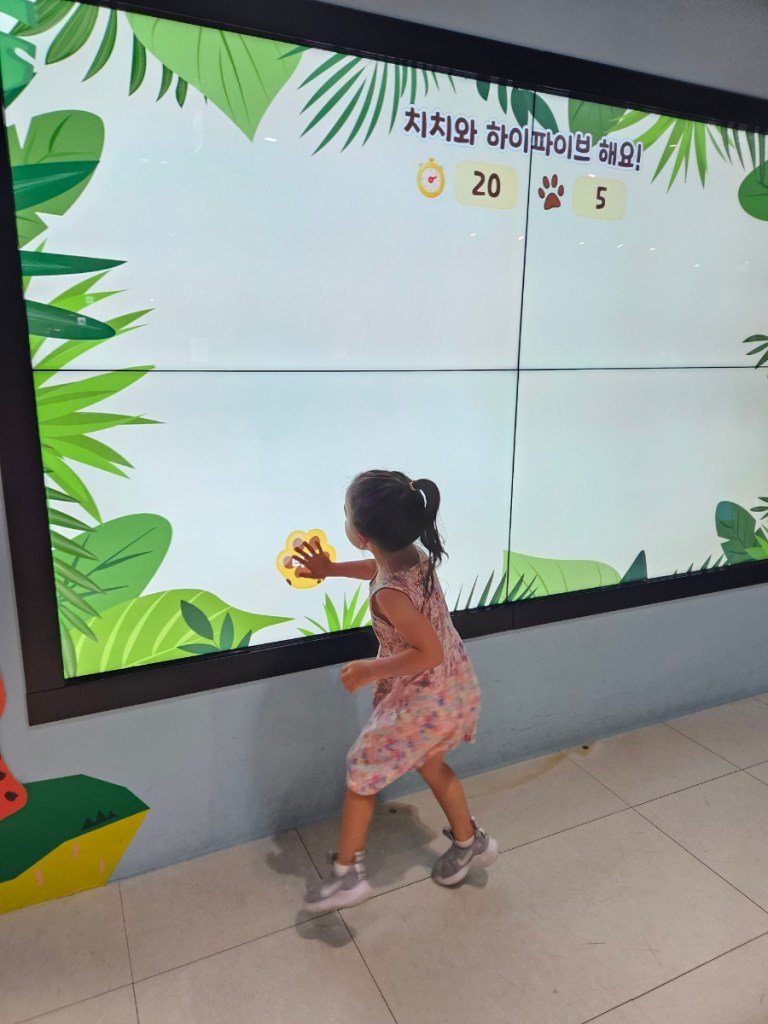
One of her favourite exhibits allowed children to colour different animals before watching them come to life as animated 3D characters on a screen. We’ve come across similar technology at several museums in Korea, but it never seems to lose its magic.
Planetarium Show
Another highlight was the planetarium show, which we booked in advance. Before entering, staff checked not only our tickets but also official identification to confirm our daughter’s age, so don’t forget to bring a passport or another form of ID for your child.
The show began with a simple introduction to the night sky and constellations before turning into an animated adventure about cats travelling through space.
It lasted around 30 minutes, which felt the perfect length for young children. The combination of storytelling and stunning visuals kept children engaged throughout, even if they weren’t able to follow every word.
The narration is in Korean, but the visuals are quite immersive, so I think many international families would still enjoy it. The planetarium also runs different shows throughout the year, so it’s worth checking the schedule on the website before your visit.
The rest of the museum is filled with interactive exhibits introducing basic scientific concepts through play, making it ideal for preschool and primary-school children.


There’s also a dedicated play area for toddlers and younger children. We skipped it this time, but our daughter loved it on our previous visit when she was two. It’s next to a communal dining space, making it easy to stop for a packed lunch or a quick snack.
Lunch
After spending 3 hours at the museum, we were ready for lunch before continuing our day in Hyehwa.
There aren’t many restaurants immediately around the museum, so we happily returned to one we’d discovered on our previous visit two years ago: Changgyeonggung Choebab (창경궁초밥).
We ordered a sushi set and a pork cutlet set, both of which were delicious and excellent value. Each meal came with a small bowl of congee as an appetiser, which was a lovely touch.
We always know a restaurant is a winner when our daughter eats well, and this one certainly passed the test. She normally has quite a small appetite, so we expected her to nibble on the udon noodles from the set meals. Instead, she happily ate almost an entire pork cutlet by herself and we needed to order another sushi set for ourselves!

After the Museum: Exploring Daehak-ro
From here, you have two easy ways to continue your day.
We’ve actually visited this area twice. On our first visit, we spent the afternoon at Changgyeonggung Palace (창경궁). This time, we fancied a slower afternoon wandering around Hyehwa (혜화) and Daehak-ro (대학로) instead. Both worked really well, so I’d choose whichever suits your family’s energy levels and interests.
If you’re planning to visit Changgyeonggung, I’d recommend doing so before returning to Hyehwa, as it avoids unnecessary backtracking.
As for us, our plans quickly changed. Hyehwa is one of those neighbourhoods where it’s easy to get distracted. Around Daehak-ro, the area’s lively main street, you’ll find shops selling character goods, accessories, stationery and all sorts of little treasures that immediately caught our four-year-old’s attention.
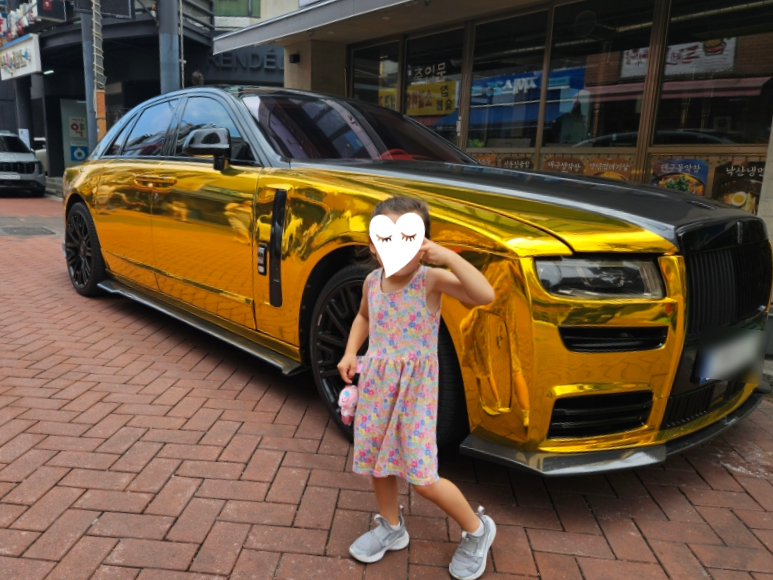
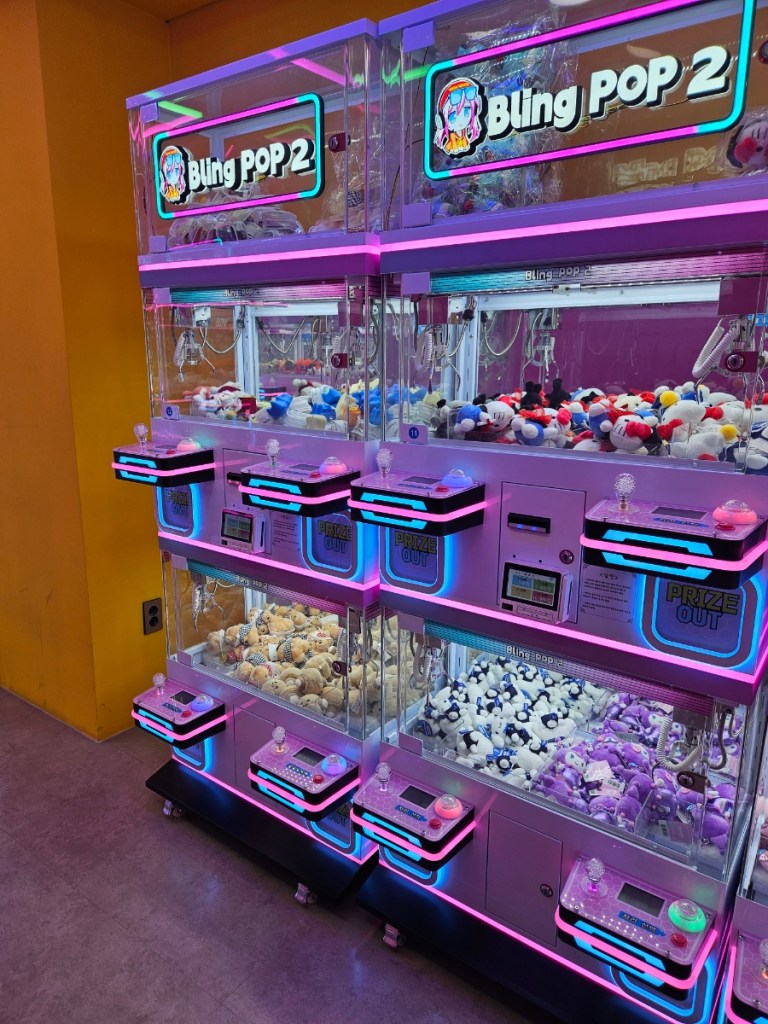
One thing we noticed this year was the sheer number of claw machine arcades. They seemed to be everywhere around the area. Things change so quickly in Korea that I don’t remember seeing nearly this many during our last visit.
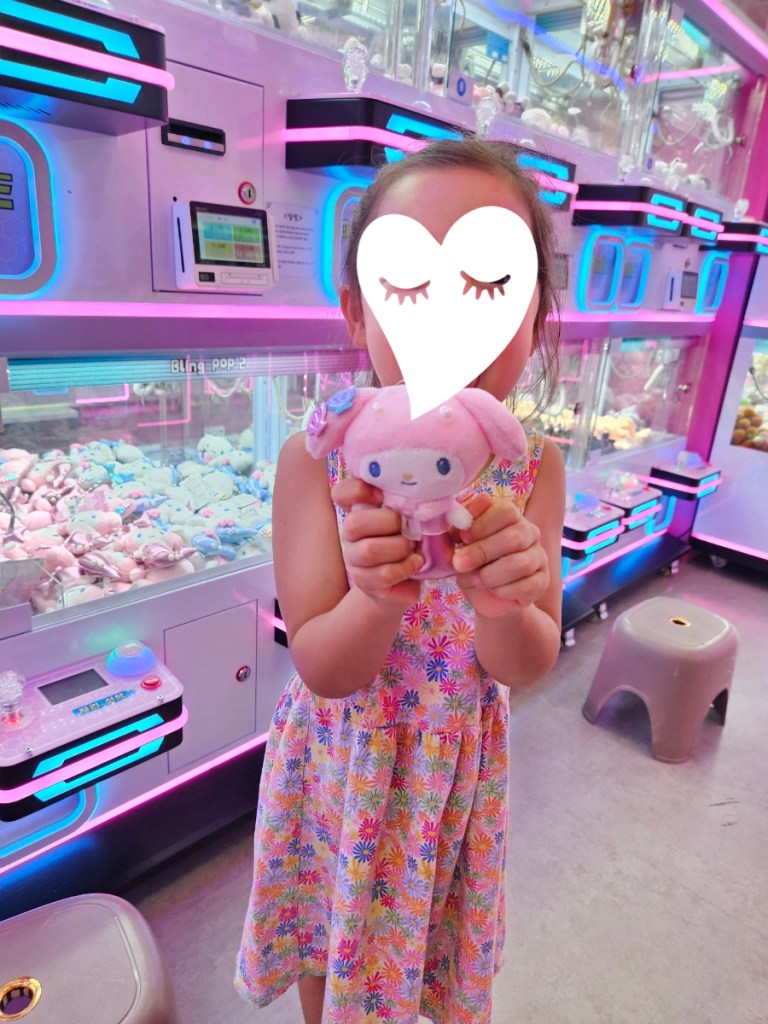
We paid 5,000 won (around £2.6) for twelve attempts and managed to win a cute My Melody plush keyring, which completely made our daughter’s day.(Sadly, the story didn’t have a happy ending—she fell asleep in the taxi later that day and accidentally left it behind.)
We also stopped by one of Korea’s famous four-cut photo booths (insaeng ne cut, 인생네컷). These self-service photo studios have become a hugely popular activity in Korea. Within minutes, you can print a strip of four photos as a fun souvenir.
Something that always fascinates me is that many of these shops operate completely unattended. Coming from London, it’s hard to imagine a business running entirely on trust like that.
Bubble Tea Break
After all the walking, we stopped at Gong Cha for a well-earned break.
Although Gong Cha originated in Taiwan, South Korea has embraced the brand, and it has become one of the country’s best-known bubble tea chains before expanding worldwide.
We have Gong Cha in London too, but somehow my husband insists it tastes better in Seoul!
We ordered a taro milk tea and a brown sugar milk tea. Unfortunately, they didn’t have the vanilla or chocolate ice cream our daughter wanted—only tea-flavoured ice cream—so bear that in mind if you’re visiting with little ones and want to avoid a potential meltdown!

Marronnier Park
Just a few steps away is Marronnier Park (마로니에 공원), right in the heart of Hyehwa’s theatre district.
One of the things I love about this area is its atmosphere. Independent theatres sit alongside cafés and shops, while buskers and student performers often bring the streets to life. During our visit, an elderly man was singing and playing a digital piano on the outdoor stage as people stopped to listen. It felt like a lovely snapshot of Seoul, where different generations and cultures share the same space.
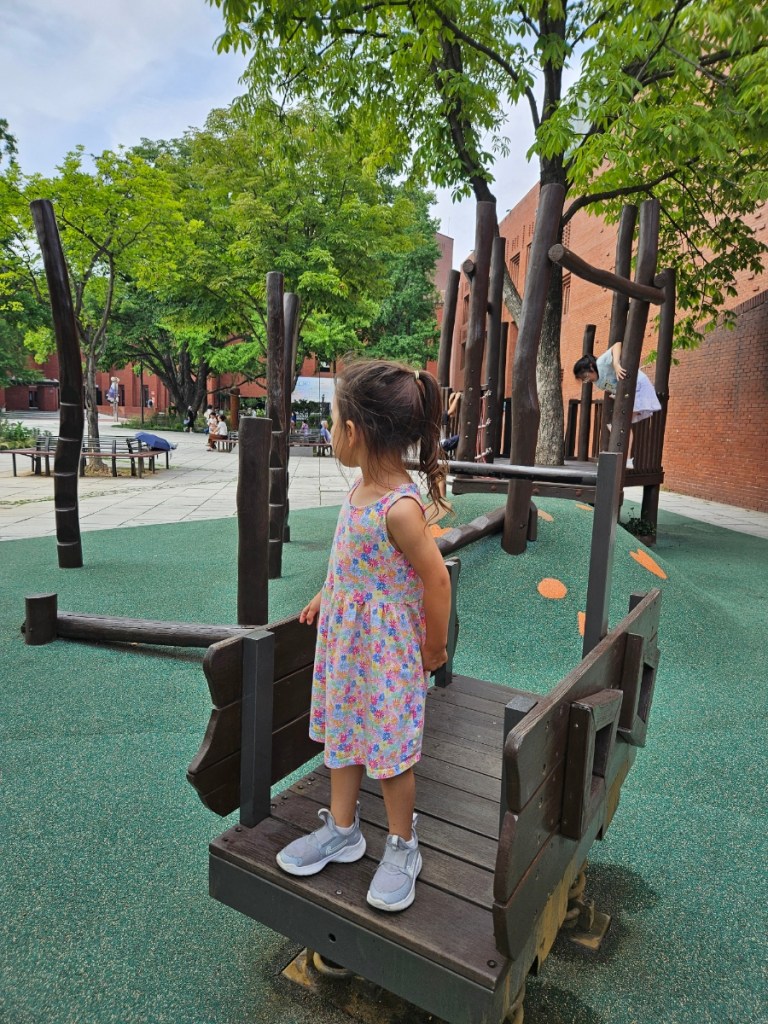
If you’re visiting with children, the park also has a small playground and plenty of open space to run around. It’s a pleasant spot to slow down for a while before continuing your day.
Another option: Changgyeonggung Palace
If you’re still full of energy after the Science Centre, another fantastic way to spend the afternoon is at Changgyeonggung Palace, just a short walk away.
This had actually been our original plan, as we’d visited the palace on our first trip to Hyehwa two years earlier. However, after a busy morning at the museum and a few days of battling jet lag, we decided on a slower afternoon exploring Dahak-ro instead.
That said, I’d definitely recommend including the palace in your itinerary. Compared with Gyeongbokgung, Seoul’s largest and most famous royal palace, Changgyeonggung feels much quieter and more intimate. The grounds are smaller and easier to explore, making it a particularly good choice for families with young children who may not enjoy walking around a huge palace complex.
It’s also a place that holds special memories for us. Before our wedding, we wore hanbok here for our pre-wedding photos, so it will always have a special place in our hearts.
Overall
This itinerary has now been tested by our family twice, and both versions worked brilliantly. Whether you finish the day shopping and people-watching around Daehak-ro or soaking up the peaceful atmosphere of Changgyeonggung Palace, you’ll end up with a relaxed day that’s packed with variety without ever feeling rushed.
For families visiting Seoul with preschoolers, it’s definitely one we’d recommend!

 Multilingual Family in London
Leave a comment