
It has now been almost a year since my husband and I started driving in the UK.
After years of happily living without a car, we finally began driving lessons last July and bought our first car in early August. We are still driving around with a green P (Probationary) plate on the back, which new drivers in the UK can display voluntarily.
Learning to drive has been one of the biggest lifestyle changes our family has made since moving to London. This is the story of how we finally got behind the wheel.
Exchanging My Korean Driving License
For most people, the obvious route to driving in the UK is to pass the British driving test. However, if you hold a driving licence from certain countries, including South Korea, the UK has reciprocal licence exchange agreements that allow you to exchange licence instead (and vice versa).
I had passed my driving test in Korea almost 20 years earlier, but I was what Koreans call a “paper driver”—someone who has a licence but almost never actually drives. I expected to finish my degree and return home, so exchanging my Korean licence for a British one never seemed necessary.
Life, of course, had other plans.
I ended up staying in the UK, got married, and eventually we started planning for a family. As our daughter grew older, owning a car gradually became more appealing.
By then, however, I was convinced I had missed my chance. I had always understood that you could only exchange your licence within five years of moving to the UK, and I had been here far longer than that
Then I disconvered something completely changed the situation. The five-year period is based on your most recent immigration permission, not necessarily the date you first arrived in the UK.
After checking everything carefully, I applied to exchange my licence, and to my immense relief, it was approved.
(My husband was in a similar position. He had also passed his driving test many years earlier in his home country without driving much afterwards. Fortunately, because he holds an EU driving licence, he can continue driving in the UK without needing to exchange it.)
Driving Lessons
Last year, my parents came to stay with us for several months, and we realised it would be the perfect opportunity. They could help with childcare while we focused on learning to drive and choosing our first car.
Popular driving instructors often have waiting lists, but fortunately we found one with excellent Google reviews who happened to have a one- to two-week gap before going on a long holiday. We were incredibly lucky. Instead of waiting months, we were able to start almost immediately, spending two to three hours a day behind the wheel in what felt like a driving boot camp.
At first, I really liked her. She was direct, confident and engaging, and enjoyed both her personality and her teaching style. As the days went on, however, I became increasingly discouraged. She reacted very strongly to mistakes that most beginners would naturally make and often spoke to me as though I were a child who needed telling off.
Learning to drive in my 40s already felt intimidating enough. Having someone raising their voice beside me certainly did not help.
One day, I actually burst into tears during a lesson 😂
That was the moment I decided to look for another instructor, although my husband carried on and completed the course with her as originally planned.
After buying our car, I booked a one-off lesson with a different instructor. The contrast could not have been greater. He was calm, encouraging and focused on building confidence rather than criticising mistakes. I wondered whether I should book more lessons, but he simply told me to keep driving. He felt I no longer needed more instruction—just more confidence and experience.
Buying Our First Car
Our first driving instructor had one non-negotiable condition: if we wanted lessons with her, we had to buy a car immediately so we could continue practising as soon as the two-week course ended.
That certainly motivated us to finally getting serious about buying a car.
Choosing our first car probably deserves a post of its own, so I’ll keep it brief here. Since we were both complete beginners, we wanted something relatively compact that would not feel intimidating on London’s narrow residential streets, while still being practical enough for a small family.
I initially leaned towards a hybrid because of my concerns about “range anxiety”, but my husband was firmly in the electric vehicle camp. In the end, we bought a used approved electric hatchback on a PCP finance agreement.
We do not have a driveway, so I had been quite worried about both parking and charging. Surprisingly, neither has been as difficult as I had imagined. Finding on-street parking is usually manageable, and public charging has been much easier than expected. That said, I suspect a driveway will be much higher on my wish list the next time we move house.
Learning by Driving
Buying the car was only the beginning.
The slightly amusing part was that we were both beginner drivers. Normally, you would hope to have an experienced driver sitting beside you, offering advice and reassurance. Instead, we had… each other.
Oddly enough, that turned out to have its advantages. Because we were learning at exactly at the same stage, we both understood what the other found difficult.
While my parents were staying with us, they looked after our daughter in the evenings so we could go out practising on quieter roads, taking turns behind the wheel. After they returned home, our routine changed. On weekdays, while our daughter was at nursery, we would choose a destination, my husband would drive there, and I would drive us home. It gave us a chance to build our confidence before taking our daugter along.
Whether it is simply personality or something else, my husband definitely gained confidence faster than I did. We started at exactly the same time, yet I could see his driving improving much more quickly.
Had one of us already been an experienced driver, we would probably have picked up many unwritten rules of British driving simply by sitting in the passenger seat. Instead, we were both complete beginners, trying to figure out everything from roundabout etiquette to the subtle ways drivers communicate with one another.
Over time, driving has gradually become part of our everyday routine.
We no longer head out purely to practise. Instead, we drive our daughter to her after-school and weekend activities, take turns to playdates and the supermarket, and make a monthly trip to Costco, about 30-40 minutes away.
My comfort zone is still fairly modest. About 30 minutes each way feels comfortable now. Longer journeys, such as our recent road trip to the Cotswolds, which involved 3-4 hours behind the wheel, are still very much my husband’s department.
Minor Accidents and Parking Fines
Like most new drivers, we have had our fair share of embarrassing moments.
Technically, our first mishap happened before we had even bought the car. During the test drive, I managed to scrape one of the wheels.🫣
A few days after buying it, my husband accidentally scraped a parked car while attempting to parallel park outside our house.
It was our first ever accident, and we were both absolutely terrified.
We left an apologetic note with our contact details tucked under the windscreen wiper. Worried that rain might ruin it, we even covered it with layers of sticky tape.
Then… nothing happened.
The note sat there for almost two weeks.
By the time my parents returned from their holiday, they took one look at the other car and suggested that what we thought was damage might simply be paint transfer from our own car. Sure enough, the mark rubbed off almost completely.
The relief was enormous. We left the note anyway, just in case, but the owner never git in touch.
Not long afterwards, I had my own mishap.
It was the first time I had driven alone with my daughter to visit a friend. I came home feeling rather pleased with myself for successfully completing the journey, only to receive a message from my friend later saying that I might have scratched one of the neighbour’s parked cars.
To this day, I am still not entirely sure what happened, but rather than arguing over it, I paid £100 towards the repair and moved on.
Parking fines have also been part of our education.
About 10 days after buying the car, my husband and I proudly congratulated ourselves on a particularly neat parallel parking job outside our house.
The next morning, we discovered a parking ticket on the windscreen.
It turned out we had parked beside a post box, where parking is restricted to 15 minutes so people can access it. The sign had been there all along. We had simply never noticed it.🥲
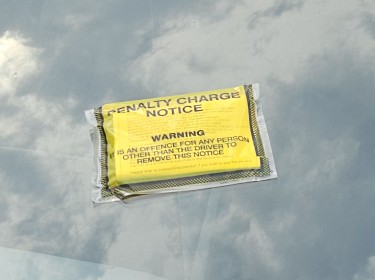
Our second fine came after visiting a retail park. We spent an afternoon having lunch and browsing a few shops before driving home, only to receive another penalty notice through the post a few weeks later.
The maximum stay was three hours. We had overstayed by about 10 minutes.
We paid the reduced amount straight away, but later discovered that some retail parks will cancel the charge if you can show receipts from the shops.
That lesson cost us £70.
On the bright side, it permanently changed one of my driving habits. Now, wherever I park, checking the signs has become almost automatic.
The Parts I still Find Difficult
Although I do not drive every day, nearly a year behind the wheel has definitely made me more confident. Even so, there are still a few situations that make me nervous.
Driving on my own is one of them. When my husband is in the passenger seat, two pairs of eyes are always better than one.
Oddly enough, driving with someone other than my husband can feel even more stressful. When friends are in the car, I become overly conscious of giving them a smooth, comfortable journey, which somehow makes me drive less naturally.
Multi-lane roads are another challenge. Every now and then I end up in the wrong lane, and at larger junctions I still occasionally find myself wondering, Which traffic light is actually mine?
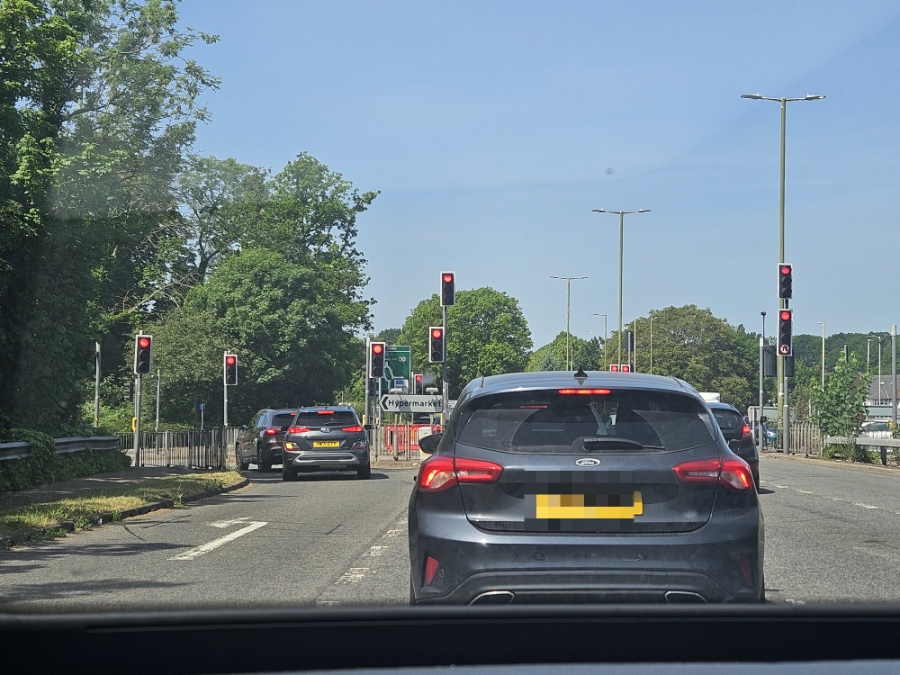
Small roundabouts no longer frighten me, but larger multi-lane ones still require far more concentration than I would like. Choosing the right lane, indicating at the right moment and finding the correct exit does not always come naturally. I have no doubt annoyed a few fellow drivers along the way. Sorry!
And then there is parallel parking.
If the road is quiet, I can usually manage given enough time. On a busy street, however, with cars waiting behind me, all confidence disappears. The more pressure I feel, the less my brain seems willing to cooperate. On more than one occasion, I have simply abandoned the attempt and driven away.
One thing I have noticed, though, is how patient most drivers in London are. Perhaps it is because we still display P plates, I often feel that other drivers recognise we are still learning and give us a bit of extra understanding. Most drivers rarely use their horns, happily wait while someone finishes parking, and are willing to give way on narrow roads.
More than once, complete strangers have even offered to help me park. Just last week, another driver got out of his car in an Aldi car park and guided me into a tight space because I was worried about clipping the car beside me.
Of course, there are exceptions.
Once, a passing car clipped our wing mirror and simply drove away without stopping. Fortunately, the mirror had only been knocked out of position and we managed to push it back into place ourselves.
Another encounter stayed with me for a very different reason.
I pulled over on a narrow road to let an oncoming car pass. The driver behind me had seen exactly what I was doing. As soon as I pulled away again, he suddenly tried to overtake. When he realised I was moving, he stopped alongside me, wound down his window and began shouting.
What I remember most, though, was the little girl sitting in his passenger seat. As her father yelled at a complete stranger, she squeezed her eyes shut and covered her ears.
Looking back, I am glad I did not respond. There is very little to gain from arguing with someone who is looking for a confrontation.
Even now, encounters with aggressive drivers stay with me for days. My heart races afterwards, and it takes me a while to feel completely relaxed behind the wheel again.
Takeaway
Despite all the challenges, I have never once regretted learning to drive.
Buying a car has changed our day-to-day life.
The biggest difference is simply not having to think so much about luggage or the weather. Before, I would constantly debate whether we really needed to carry one more bag, only to decide it was too much hassle. Now, if I think we might need something, it just goes in the boot. Rain or shine, getting around is much less stressful.
Having a car has also opened up so much more of London and the surrounding countryside. Instead of returning to the same familiar places every weekend, we now find ourselves exploring somewhere new far more often.
Nearly a year on, I am still driving with my P plates. Part of me likes the extra patience and understanding they seem to encourage from other drivers, but another part wonders whether they have become a bit of a psychological safety blanket. Perhaps it is finally time to take them off and trust myself a little more.
Four-lane junctions, giant roundabouts, motorways… one by one, I’ll conquer them all!

 Multilingual Family in London
Leave a comment